NOTES
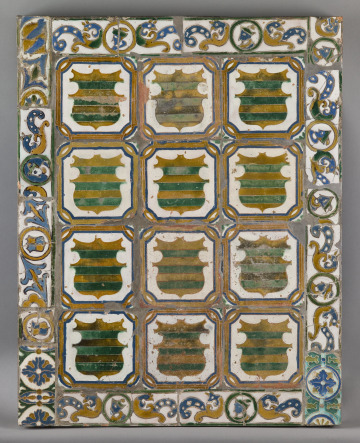
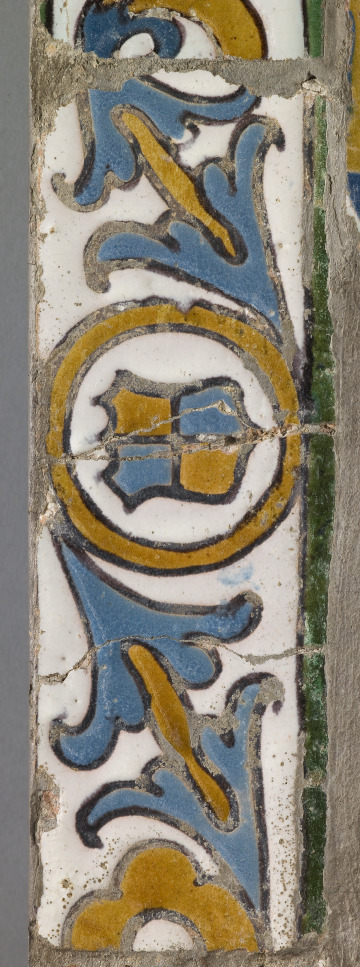
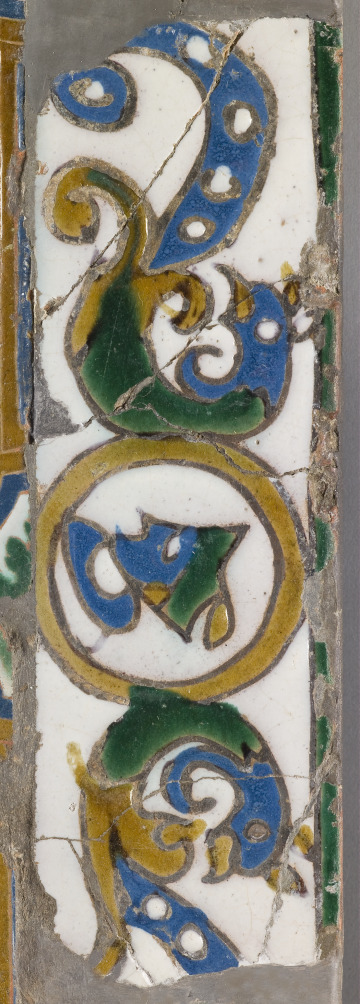
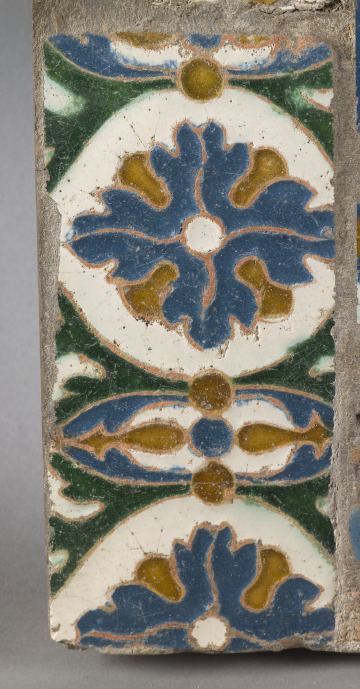
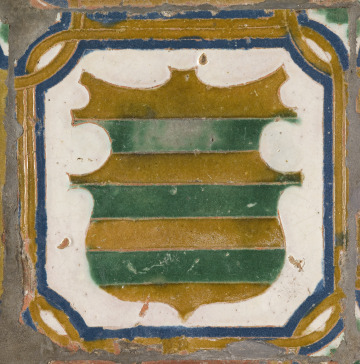
This tile panel is a composite made for sale in the United States, to hang on a wall like a painting. Its current form reflects a second life for these works of art, quite different from their original function as architectural revetments. The square tiles bear the coat of arms of a prominent Toledo family, the Riberas, and would have decorated the lower wall in one of their palaces or a building constructed under their patronage. The rectangular border tiles have generalized heraldic motifs that do not refer to a specific family. They are called alizares in Spanish and would have been used on staircases and as colorful accents on tiled floors. They are made using the cuerda seca technique, which means “dry cord.” This term refers to an oily substance composed primarily of manganese that was used to separate brightly colored glazes so that they would not run together during the firing process. This oily substance melts away, leaving a hollow in between the bright colors. Whereas glazing techniques came to Spain from Iran, the cuerda seca technique was a Spanish invention which later spread to Iran.