Double Exposure
- Material
- Oil and wax on canvas

James Little, American, born 1952; Double Exposure, 2008 (detail); oil and wax on canvas; 39 x 50 inches; The Thelma and Bert Ollie Memorial Collection, Gift of Ronald and Monique Ollie 190:2017; © June Kelly Gallery / James Little
The Shape of Abstraction: Selections from the Ollie Collection presents paintings, drawings, and prints by five generations of black artists who have revolutionized abstract art since the 1940s. The exhibition includes Norman Lewis’s gestural drawings, Sam Gilliam’s radically shaped paintings, James Little’s experiments with color, and Chakaia Booker’s explorations in printmaking, among many others. Despite their significant contributions, many of these accomplished artists have remained largely under recognized and omitted from the existing narrative of art history. However, the reexamination and celebration of this history is underway.
In 2017, St. Louis native Ronald Ollie and his wife, Monique, gave the Saint Louis Art Museum a transformative collection of 81 works by black abstractionists. Ollie, who passed away in June 2020, spent decades collecting, often befriending the artists and forming long, collaborative relationships. He grew up visiting the Museum with his parents, who nurtured his deep appreciation for art. This exhibition draws from and celebrates the Thelma and Bert Ollie Memorial Collection, which was named in honor of his parents.
The Shape of Abstraction: Selections from the Ollie Collection was curated by Gretchen L. Wagner, Andrew W. Mellon Fellow for Prints, Drawings, and Photographs; and Alexis Assam, 2018–2019 Romare Bearden Graduate Museum Fellow.
The five generations of artists represented in this exhibition revolutionized abstract art from the 1940s to the present. Their innovations with form, color, process, and materials are paramount to the development of Abstract Expressionism and art movements that followed. Despite their significant contributions, many of these accomplished figures, all of whom are black artists working in the United States and abroad, have remained largely under recognized and omitted from the existing narrative of art history.
As artists of African descent negotiating racial inequality, they were often denied entry to the exhibition opportunities and professional circles enjoyed by their famed American and European peers. Moreover, dedicated to abstraction, they encountered additional divisions with other black artists who insisted on addressing issues of identity and struggle through representational art. Facing such headwinds, these abstractionists forged their own networks, fostering connections with each other, as well as curators, scholars, dealers, and collectors, to support creative production and critical discourse. The exhibition—its title based on the Quincy Troupe poem—features a selection of works from the Ollie gift.
Many artists included in this exhibition sought exposure to foreign cultures and landscapes. At various points in their careers, they actively pursued opportunities to travel or even permanently relocate abroad. For 20th-century black American artists, life outside the United States could offer freedom from the debilitating limitations imposed by the discrimination they encountered at home.
Considered a leading venue of modern art, Paris remained a destination of choice for many artists even after World War II (1939–1945). The artists Herbert Gentry, Ed Clark, Robert Blackburn, Larry Potter, and Sam Middleton each resided there during the 1940s and 1950s. As US military veterans, several utilized G.I. Bill subsidies to attend the city’s prestigious art schools and establish their own studios in this art capital.
Daily life in the battered city of Paris, plagued by food rations and intermittent heat and electricity, proved challenging. However, access to many founders of abstraction, including Pablo Picasso, Georges Braque, and Constantin Brancusi, and the intellectual exchange fostered in the vibrant café culture were exceptionally formative. Gentry, Clark, and Middleton lived and worked abroad for decades, seeking inspiration for their art from their newfound environments.
Robert Blackburn, American, 1920–2003; Faux Pas, 1960; lithograph; sheet: 30 × 22 1/8 inches; Saint Louis Art Museum, The Thelma and Bert Ollie Memorial Collection, Gift of Ronald and Monique Ollie 121:2017; © The Estate of Robert Blackburn

Untitled (Bahia Series), 1988
Ed Clark, American, born 1926
dry pigment
The Thelma and Bert Ollie Memorial Collection, Gift of Ronald and Monique Ollie 130:2017
© Ed Clark / Michael Rosenfeld Gallery
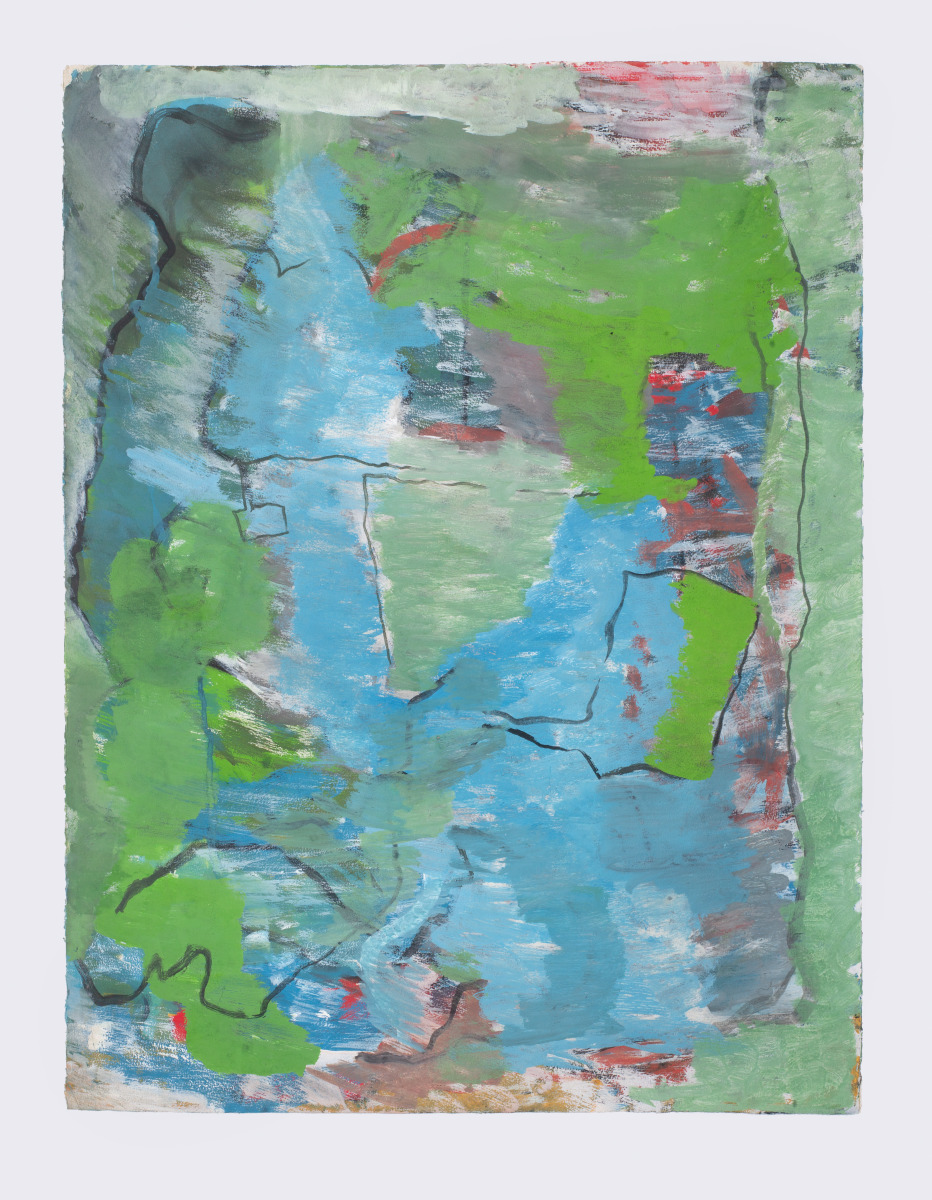
Untitled, n.d.
Larry Potter, American, 1925–1966
gouache and acrylic
The Thelma and Bert Ollie Memorial Collection, Gift of Ronald and Monique Ollie 178:2017
© Larry Potter
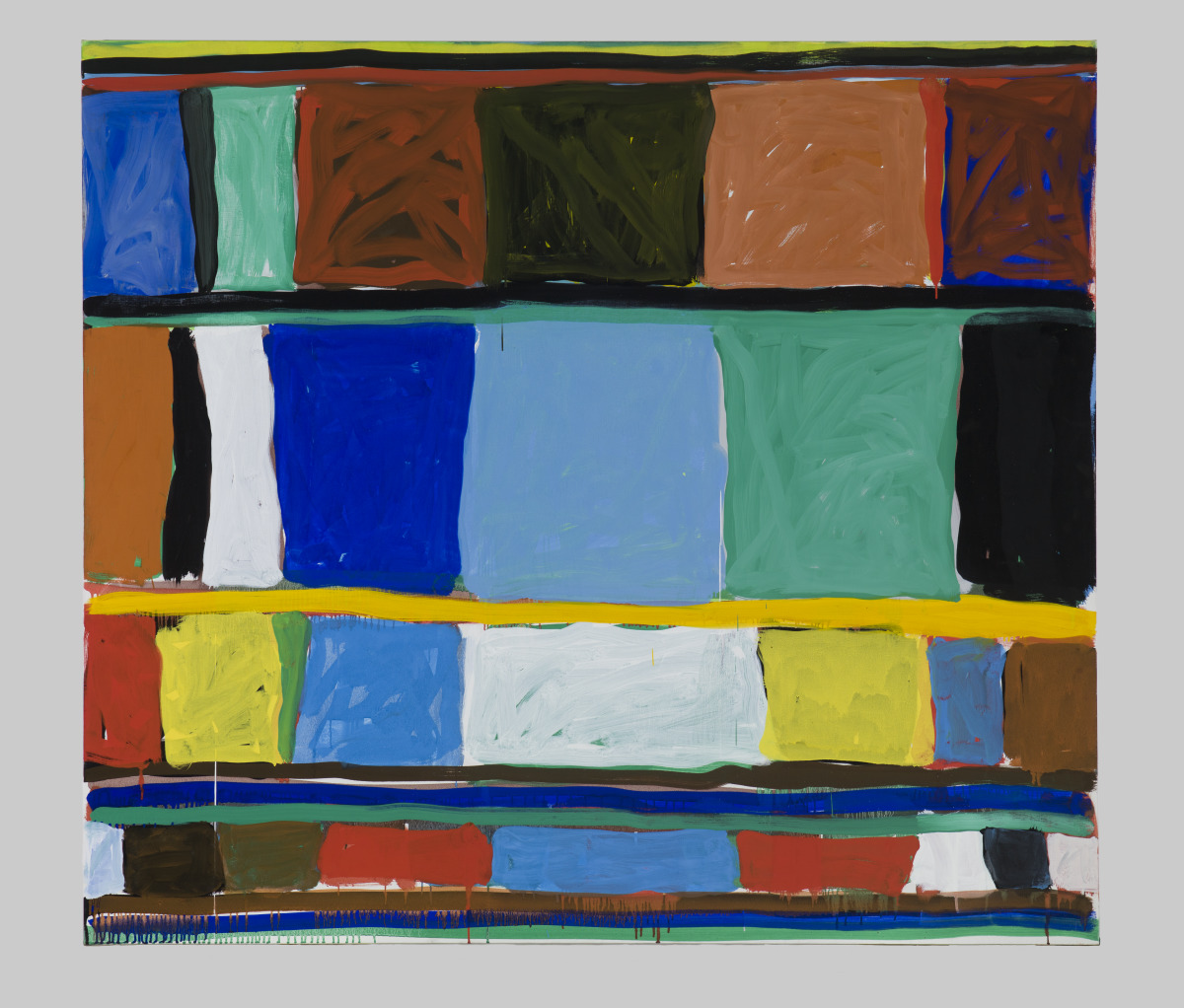
Out into the Open, 2000
Stanley Whitney, American, born 1946
acrylic on canvas
The Thelma and Bert Ollie Memorial Collection, Gift of Ronald and Monique Ollie 193:2017
© Lisson Gallery / Stanley Whitney
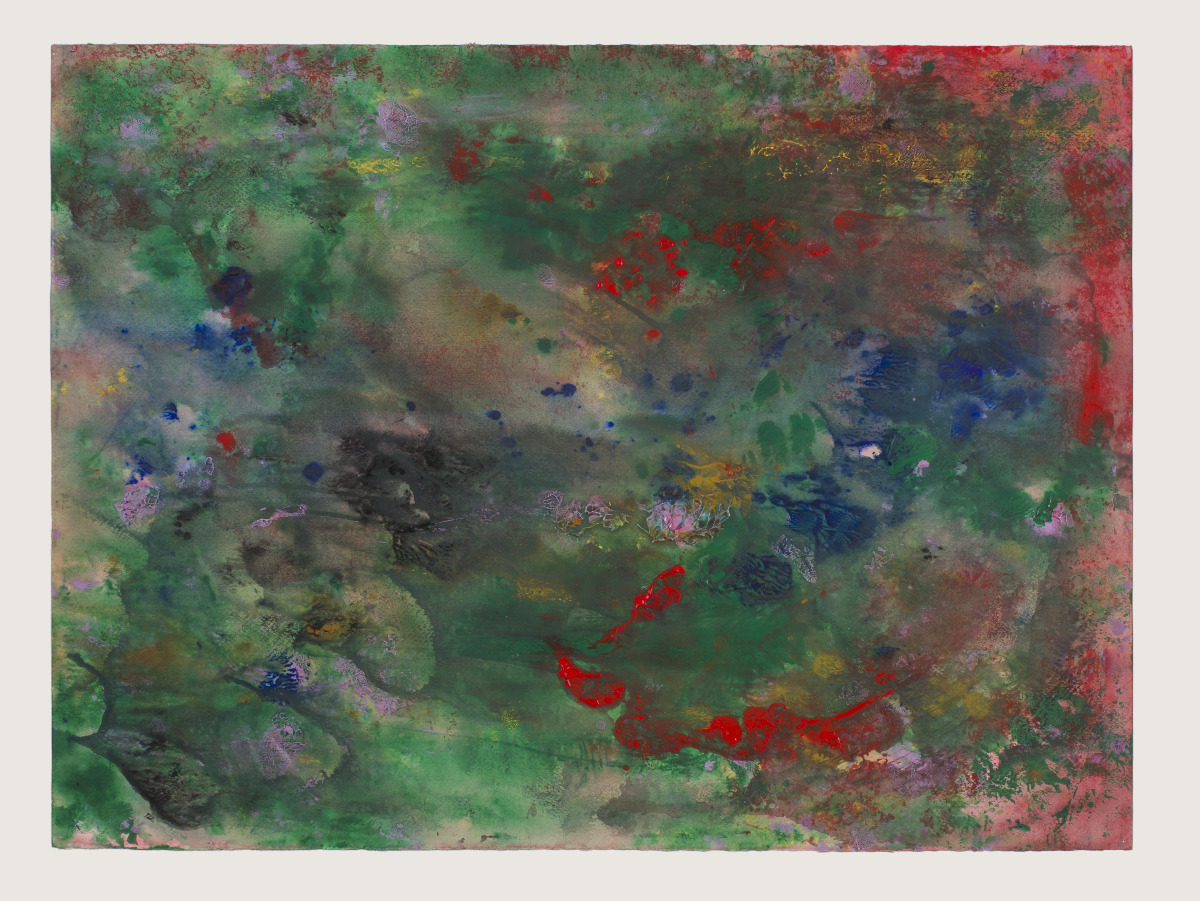
III, 2001
Winston Branch, British (born St. Lucia), born 1947
gouache and oil
The Thelma and Bert Ollie Memorial Collection, Gift of Ronald and Monique Ollie 123:2017
© Winston Branch
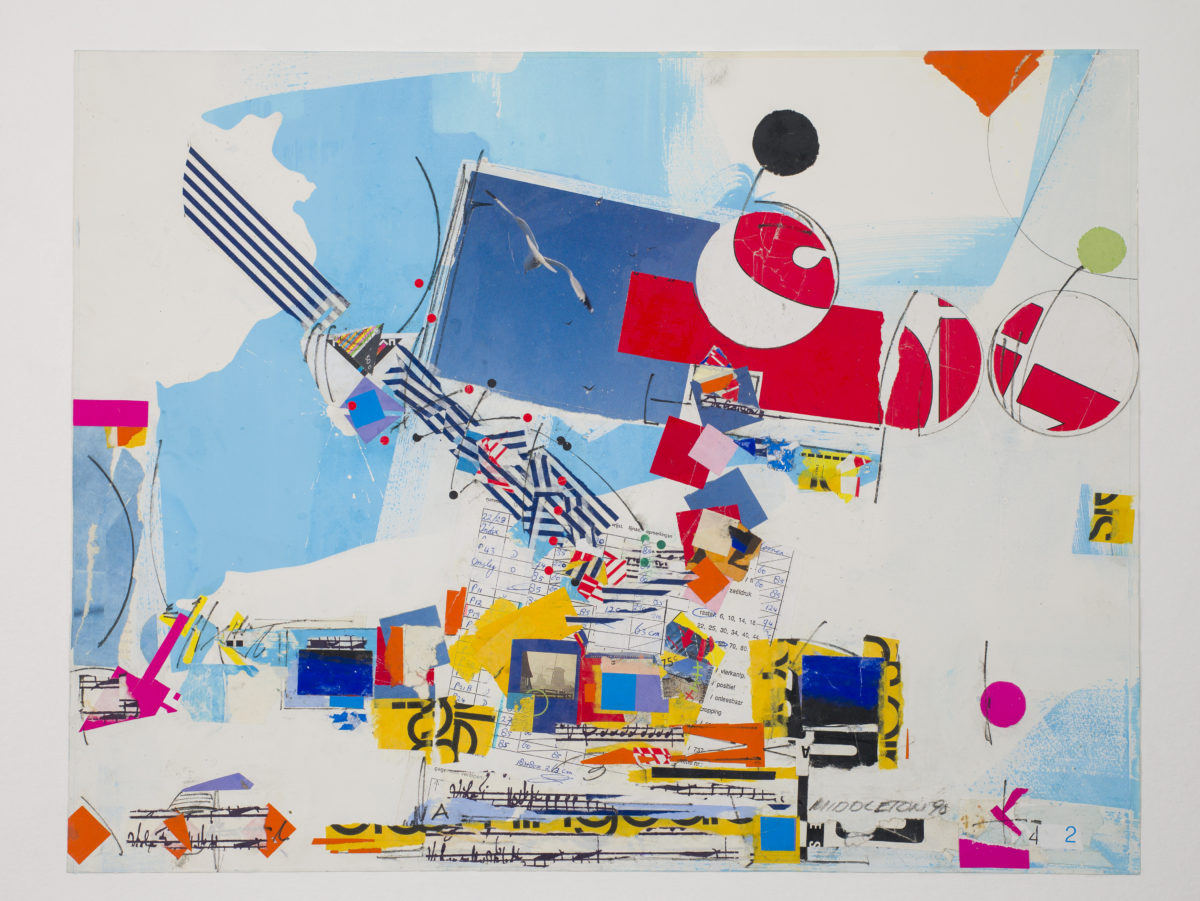
Untitled, 1990
Sam Middleton, American, 1927–2015
collage of cut and torn printed and painted papers, with paint and graphite
The Thelma and Bert Ollie Memorial Collection, Gift of Ronald and Monique Ollie 174:2017
© Sam Middleton estate; Courtesy of Spanierman Modern
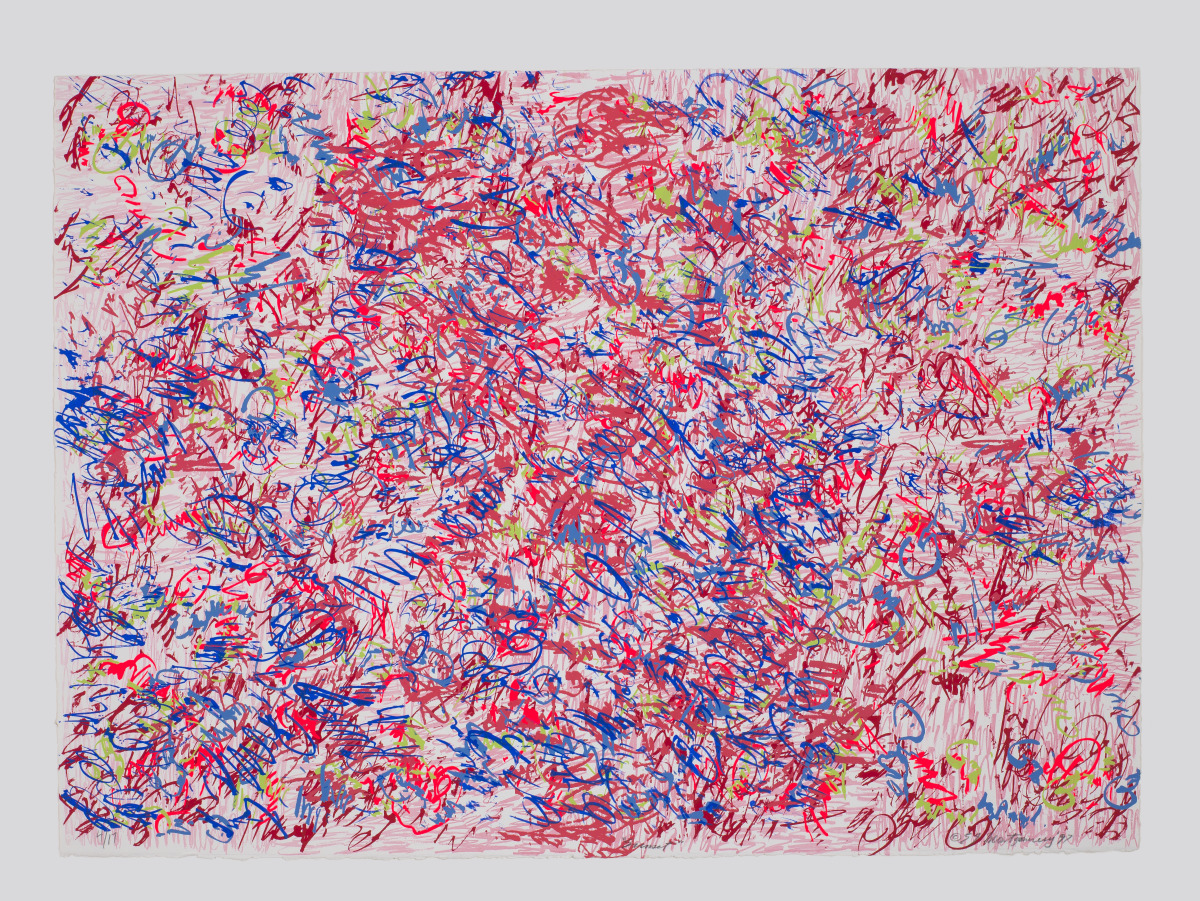
Sunset, 1997
Evangeline Montgomery, American, born 1933
offset lithograph
published and printed by Brandywine Workshop, Philadelphia
The Thelma and Bert Ollie Memorial Collection, Gift of Ronald and Monique Ollie 176:2017
Courtesy the artist Evangeline J. Montgomery and Galerie Myrtis; © Evangeline Montgomery
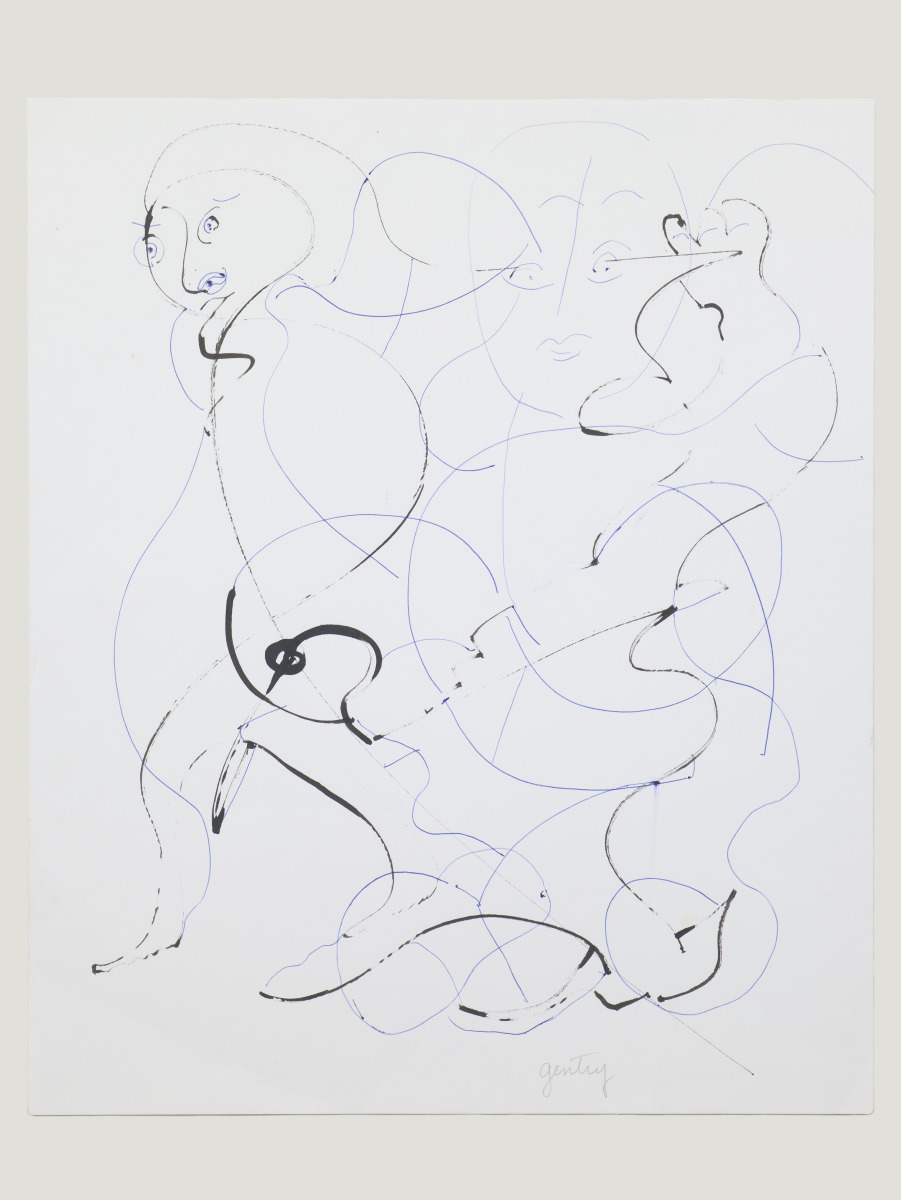
Untitled, 1971
Herbert Gentry, American, 1919–2003
ink
The Thelma and Bert Ollie Memorial Collection, Gift of Ronald and Monique Ollie 149:2017
© Mary Anne Rose and the Estate of Herbert Gentry

Untitled, 1974
Herbert Gentry, American, 1919–2003
graphite
The Thelma and Bert Ollie Memorial Collection, Gift of Ronald and Monique Ollie 147:2017
© Mary Anne Rose and the Estate of Herbert Gentry
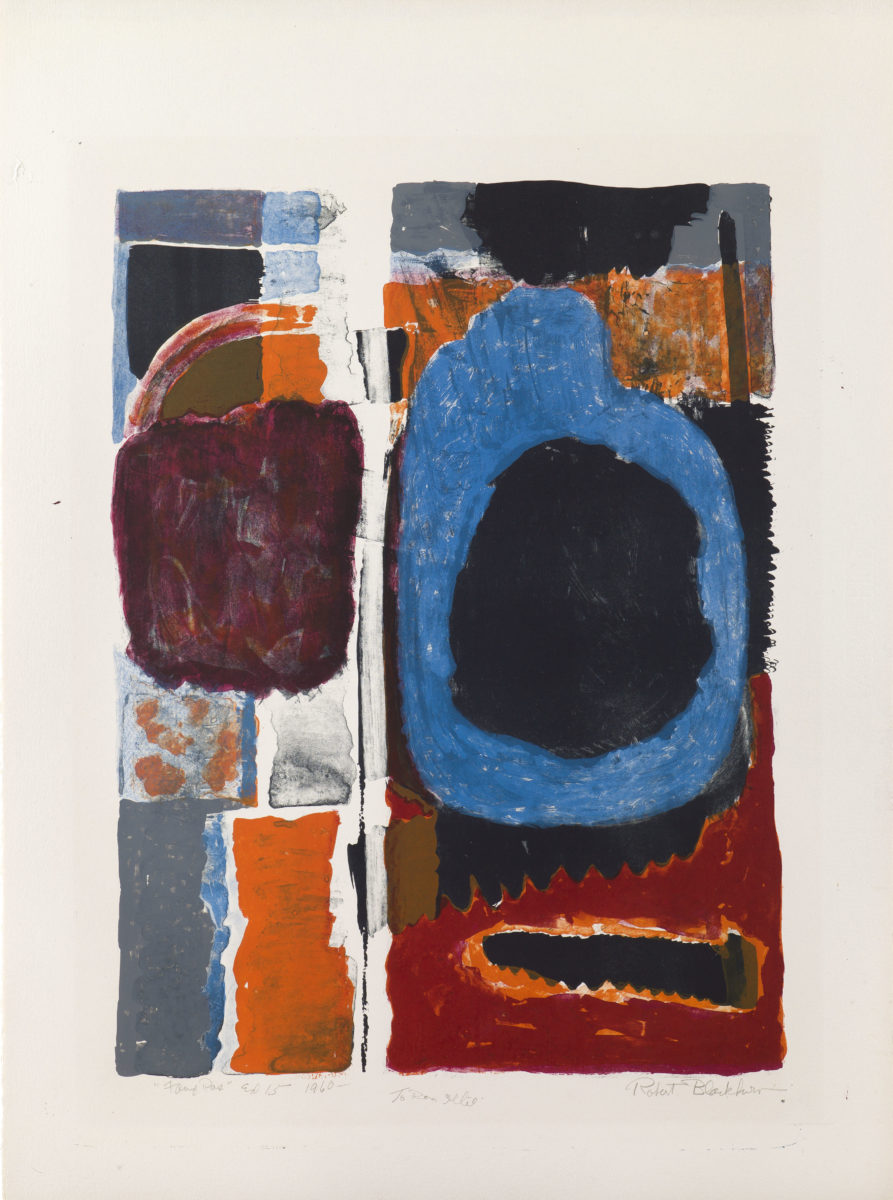
Faux Pas, 1960
Robert Blackburn, American, 1920–2003
lithograph
published and printed by the artist
The Thelma and Bert Ollie Memorial Collection, Gift of Ronald and Monique Ollie 121:2017
© The Estate of Robert Blackburn
Many of the artists represented in the Ollie Collection emphasized experimentation with materials and processes in the studio. Rather than following prescribed modes of abstraction, they created works that combined techniques borrowed from painting, drawing, printmaking, collage, and sculpture.
The invention of acrylic paint, introduced to the commercial market in the 1960s, was an influential development. Numerous artists, including Frank Bowling, Bill Hutson, and Frank Wimberley, made this quick-drying medium a central part of their creative practices. Alternatively, others were inspired by ancient techniques, such as James Little’s adaption of encaustic painting.
These artists employed new methods of art making using nontraditional materials such as sticks or brooms to apply color and exploring unconventional processes such as dripping, staining, pouring, and weaving. Collage also allowed for a hybrid format, combining formal theories with the influence of quilting. Some artists developed systems to streamline their processes. For example, Frank Bowling created a floor platform and specialized stretcher to guide the flow of paint. This constant experimentation remains a critical concern driving these artist’s creative approaches.
Frank Bowling, British, born Guyana, 1936; Fishes, Wishes, and Star Apple Blue, 1992; acrylic on canvas; 39 1/2 x 40 inches; The Thelma and Bert Ollie Memorial Collection, Gift of Ronald and Monique Ollie 187:2017; © Frank Bowling
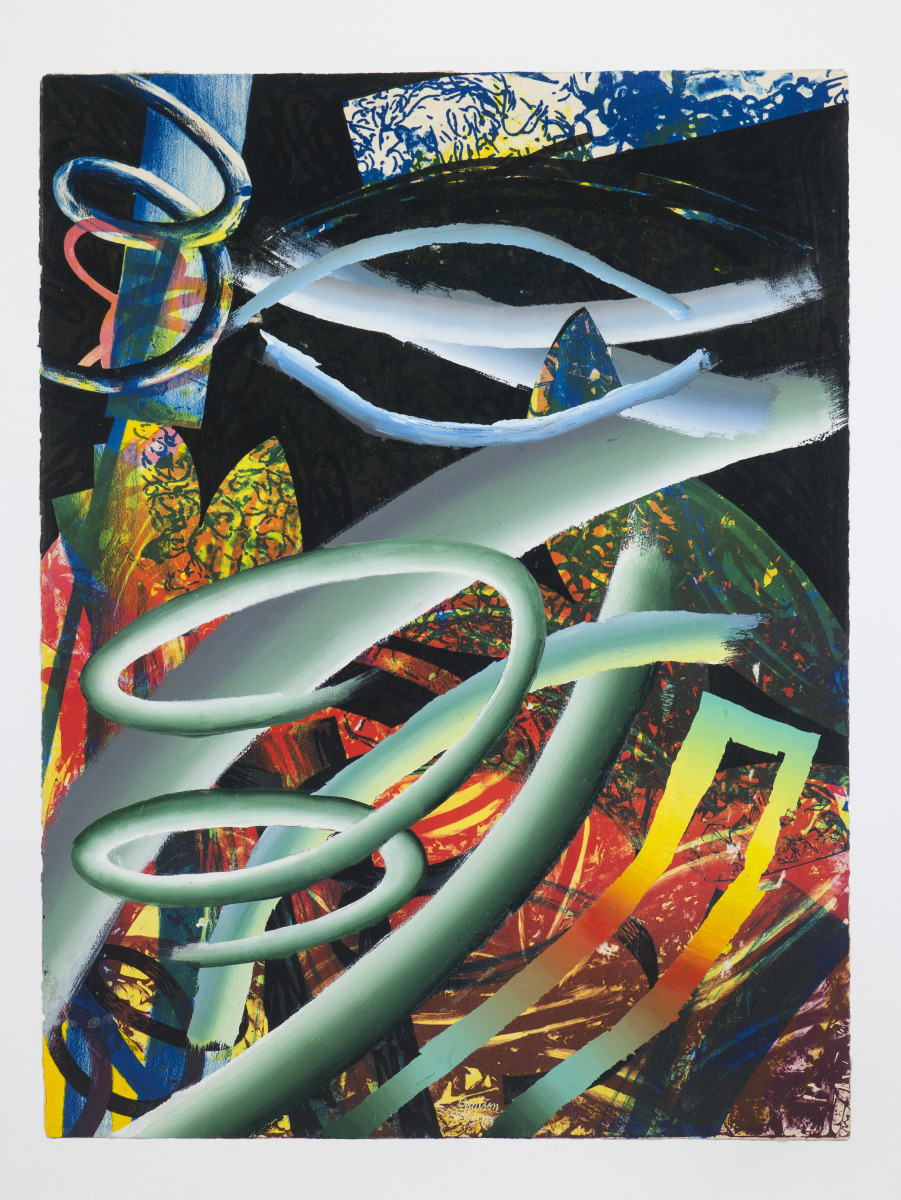
Ebco Na, 1990-91
Bill Hutson, American, born 1936
offset lithograph with acrylic
printed by Brandywine Workshop, Philadelphia
The Thelma and Bert Ollie Memorial Collection, Gift of Ronald and Monique Ollie 160:2017
© Bill Hutson

Moon Dust, 1994
Allie McGhee, American, born 1941
acrylic
The Thelma and Bert Ollie Memorial Collection, Gift of Ronald and Monique Ollie 173:2017
© Allie McGhee
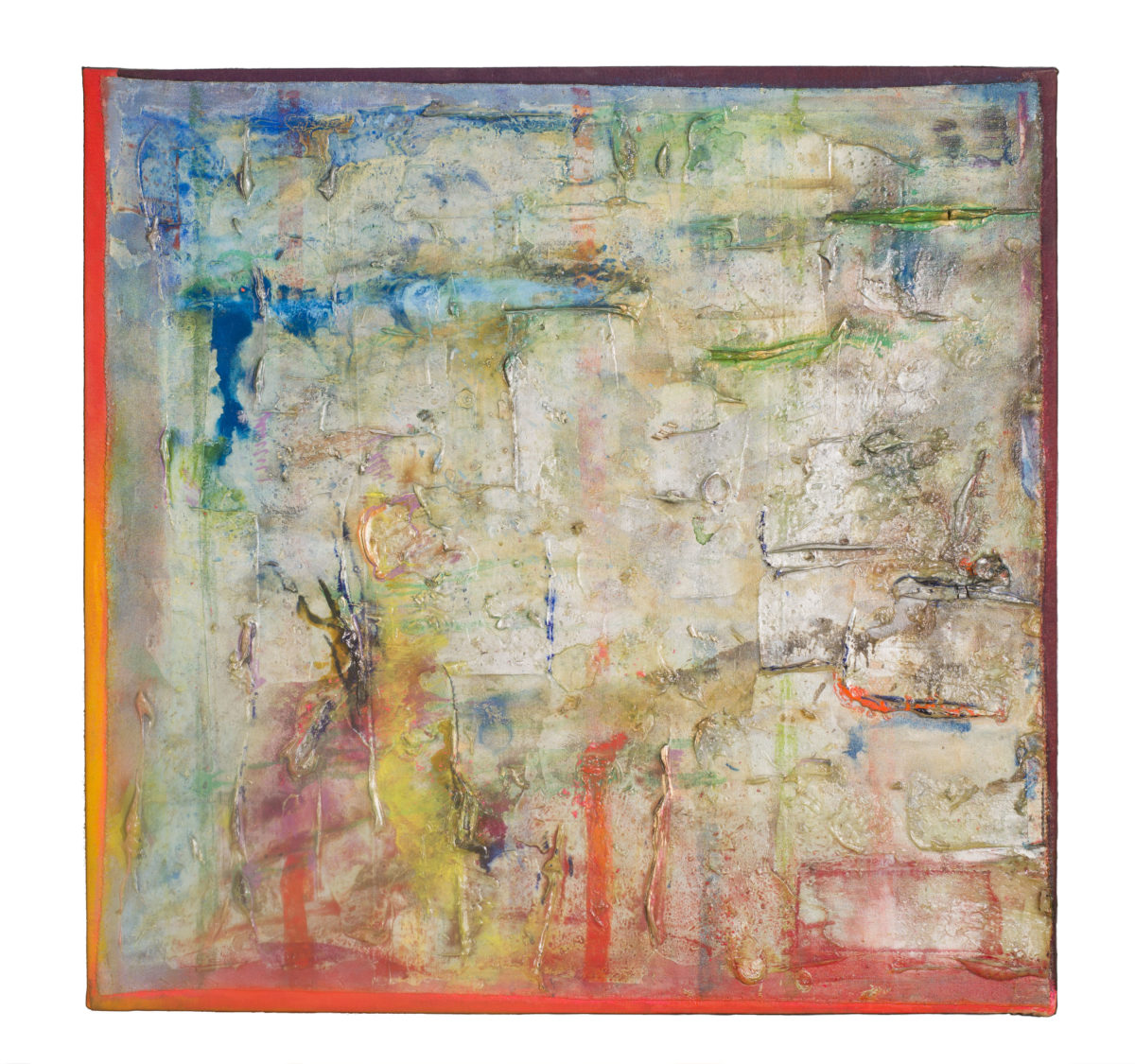
Fishes, Wishes and Star Apple Blue, 1992
Frank Bowling, British (born Guyana), born 1936
acrylic on canvas
The Thelma and Bert Ollie Memorial Collection, Gift of Ronald and Monique Ollie 187:2017
© Frank Bowling
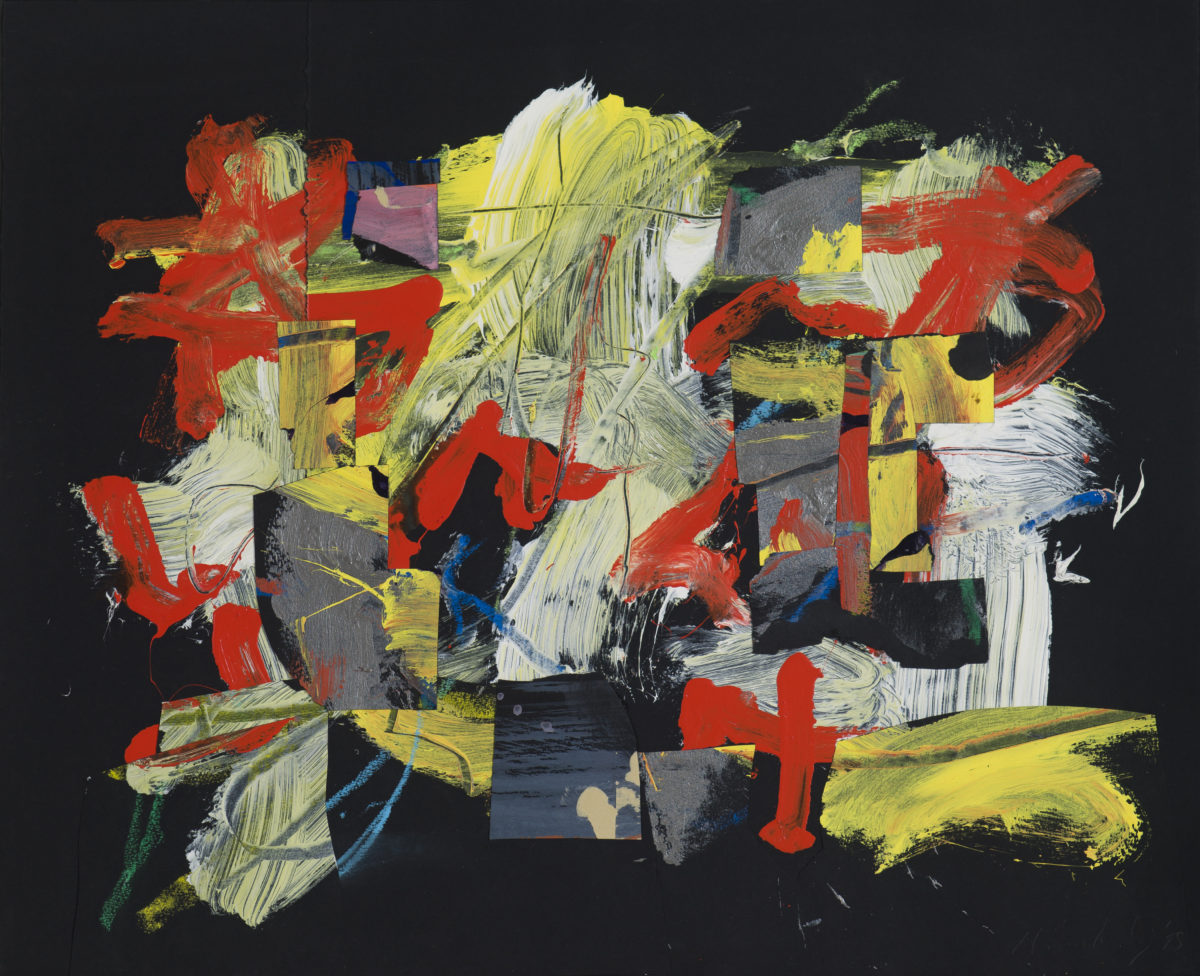
Siempre (Always), 1998
Frank Wimberley, American, born 1926
collage of cut painted paper with pastel; 22 1/4 × 27 1/8 inches
The Thelma and Bert Ollie Memorial Collection, Gift of Ronald and Monique Ollie 184:2017
© Frank Wimberley

Study for Surrogate, 2002
James Little, American, born 1952
watercolor
The Thelma and Bert Ollie Memorial Collection, Gift of Ronald and Monique Ollie 168:2017
© June Kelly Gallery / James Little
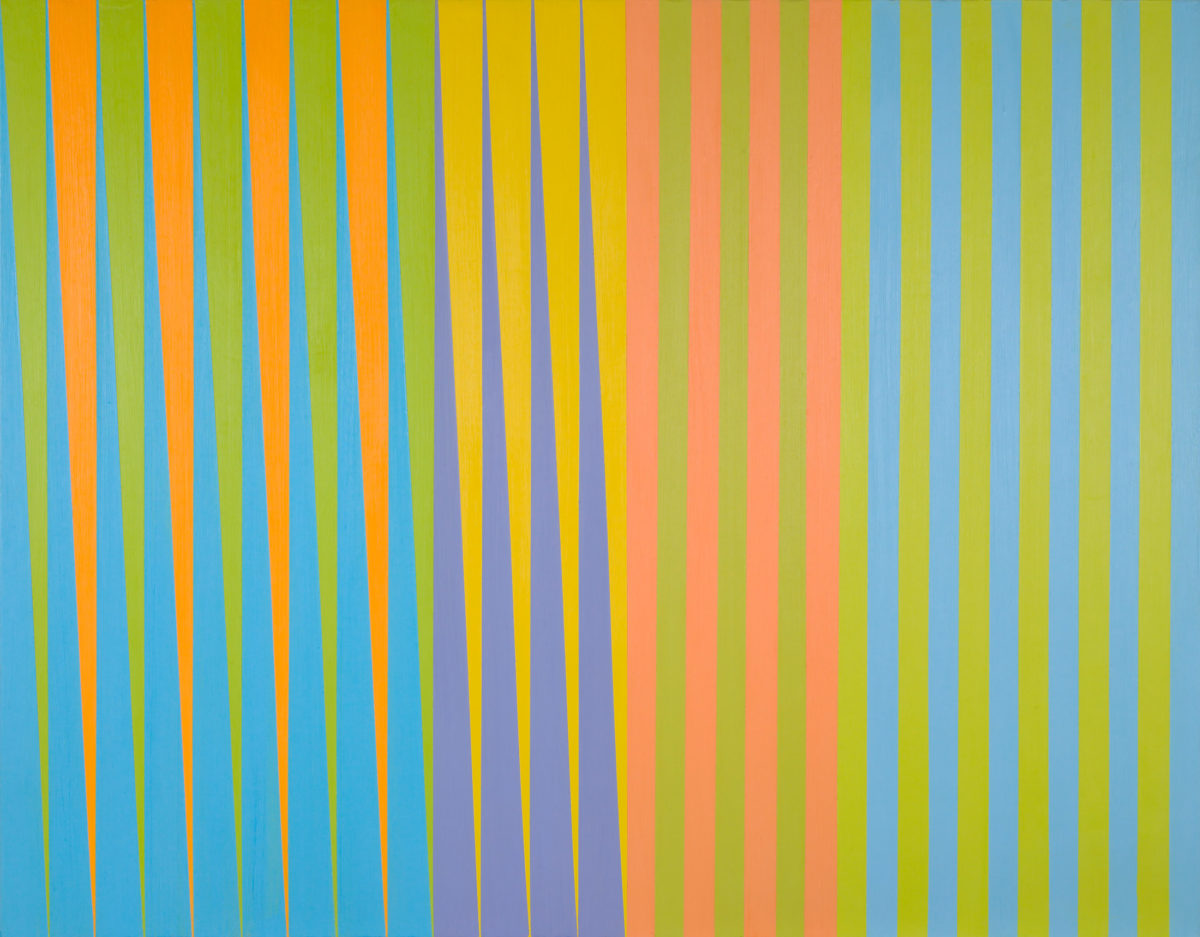
Double Exposure, 2008
James Little, American, born 1952
oil and wax on canvas
The Thelma and Bert Ollie Memorial Collection, Gift of Ronald and Monique Ollie 190:2017
© June Kelly Gallery/James Little

Slightly Off Keel #60, 1999
Nanette Carter, American, born 1954
oil on Mylar
The Thelma and Bert Ollie Memorial Collection, Gift of Ronald and Monique Ollie 124:2017
© Nanette Carter

Untitled, 2014
Chakaia Booker, American, born 1953
woodcut and lithograph with chine collé
published by James E. Lewis Museum of Art Foundation, Inc., Baltimore
printed by Robert Blackburn Printmaking Workshop, New York
The Thelma and Bert Ollie Memorial Collection, Gift of Ronald and Monique Ollie 122:2017
© Chakaia Booker

Journey Signs, 1993
Frank Wimberley, American, born 1926
acrylic on canvas with collage
The Thelma and Bert Ollie Memorial Collection, Gift of Ronald and Monique Ollie 194:2017
© Frank Wimberley
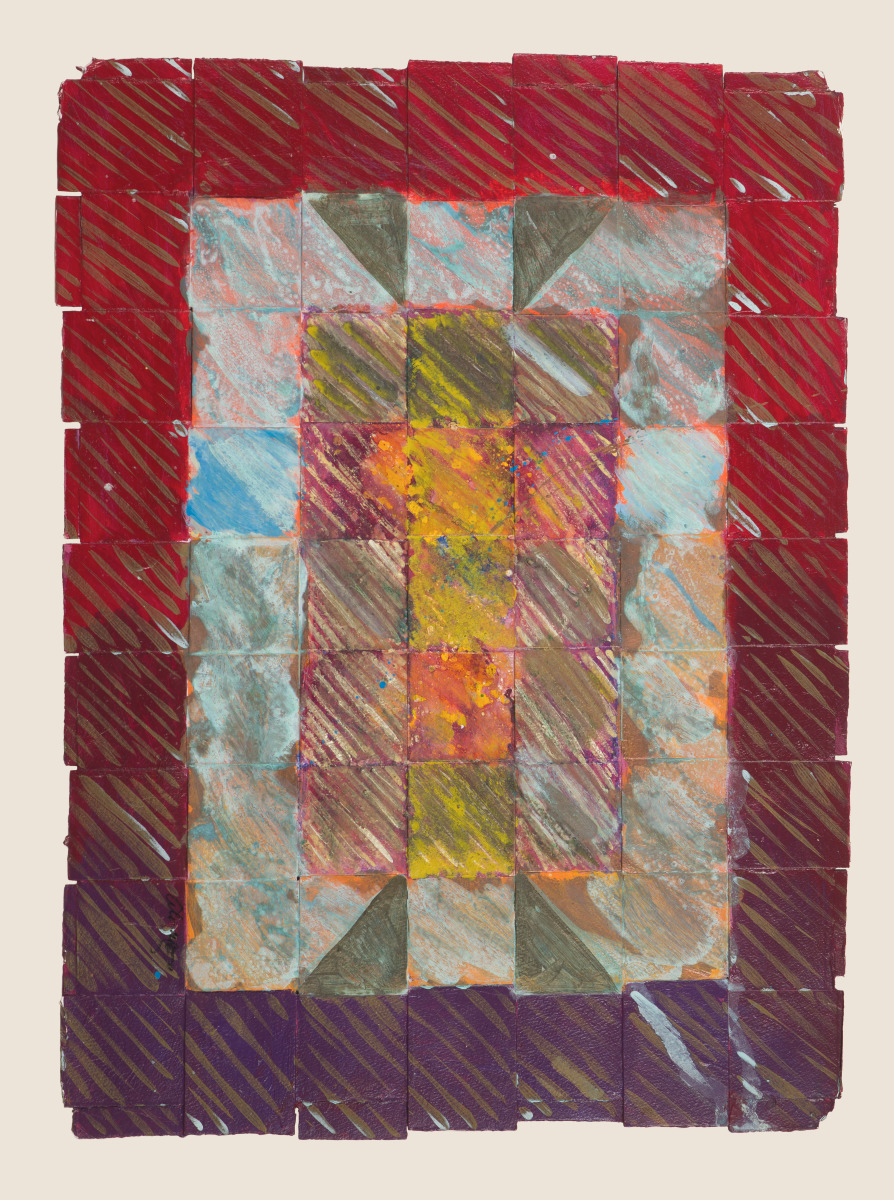
Rock Steady, 1992
Alonzo Davis, American, born 1942
mixed media
The Thelma and Bert Ollie Memorial Collection, Gift of Ronald and Monique Ollie 134:2017
© Alonzo Davis
Although depicting the human form may seem contradictory to modern abstraction, figural representation has a long, intertwined history with the development of abstraction during the 20th century. Indeed, many artists enjoyed exploring the tension between the naturalistic portrayal of the figure or landscape and a purely abstract vocabulary.
Abstract art was a contentious topic in the black art community during the late 1960s and early 1970s. The Black Arts movement—the aesthetic counterpart to the Black Power movement—advocated that these artists create empowering images of subjects that directly communicated the shared experiences and heritage of their people. According to the Black Arts movement, abstract art largely failed to meet this charge, and, as a result, the movement criticized many who focused on harnessing the potential of color, line, and shape alone.
For committed abstractionists, Norman Lewis, who articulated his own activism through a combination of abstraction and figuration, often stood as a beacon. From an older generation, Lewis and Herbert Gentry retained the figure to create a dialogue with the automatic, gestural approaches of Abstract Expressionism. The younger Benny Andrews and William T. Williams tapped Surrealist, or dreamlike, imagery and geometric tendencies, respectively.
Herbert Gentry, American, 1919–2003; Our Web, 1990; gouache; sheet: 29 1/2 × 22 1/4 inches; Saint Louis Art Museum, The Thelma and Bert Ollie Memorial Collection, Gift of Ronald and Monique Ollie 151:2017; © Mary Anne Rose and the Estate of Herbert Gentry
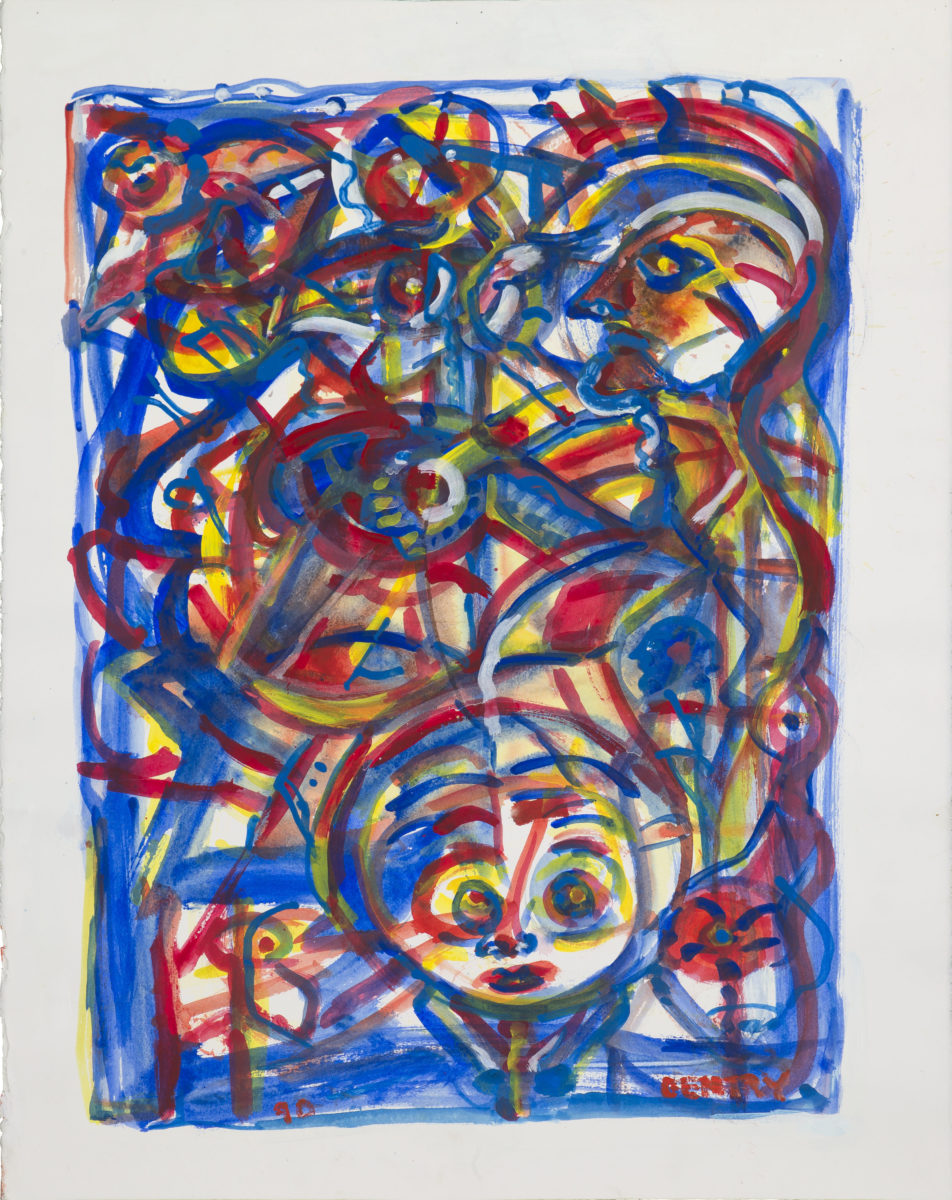
Our Web, 1990
Herbert Gentry, American, 1919–2003
gouache
The Thelma and Bert Ollie Memorial Collection, Gift of Ronald and Monique Ollie 151:2017
© Mary Anne Rose and the Estate of Herbert Gentry
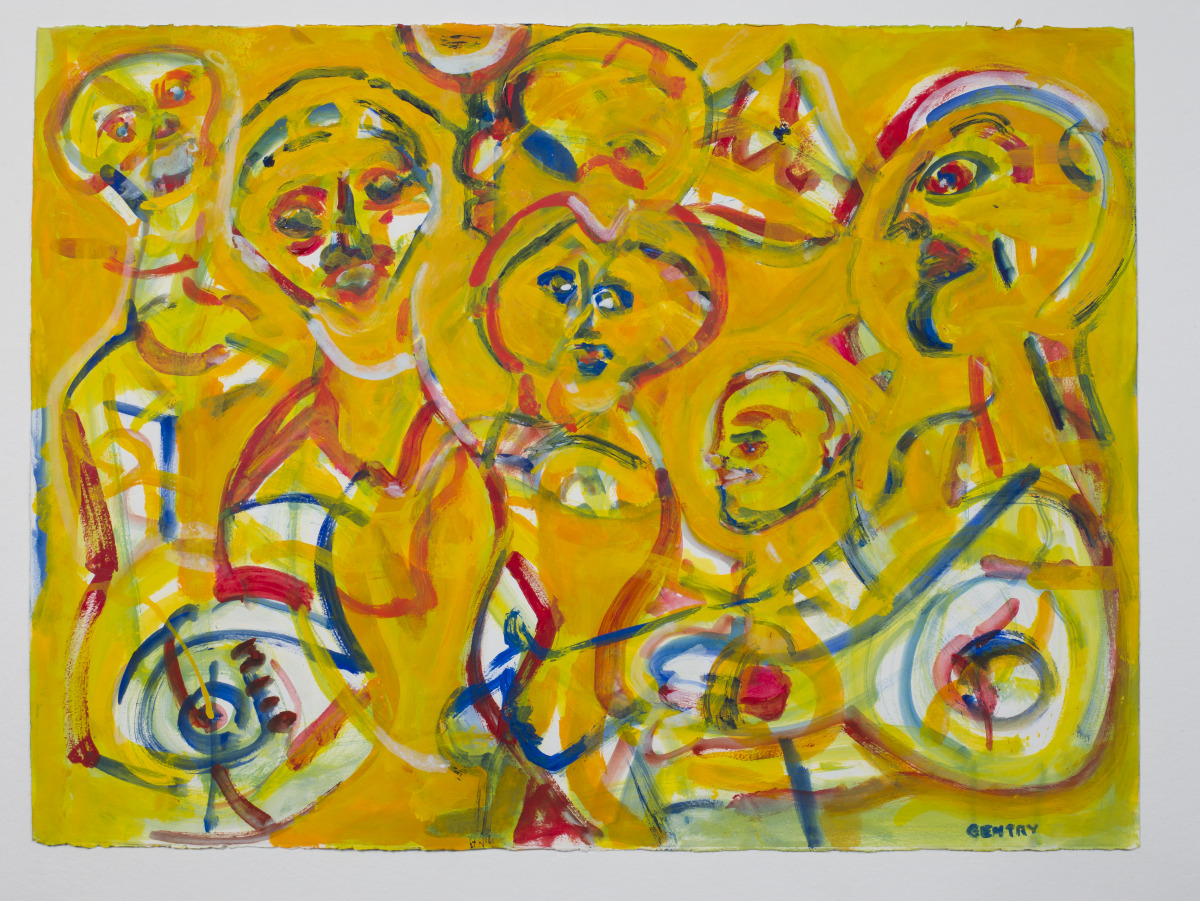
Our Talk, c.1989
Herbert Gentry, American, 1919–2003
gouache
The Thelma and Bert Ollie Memorial Collection, Gift of Ronald and Monique Ollie 152:2017
© Mary Anne Rose and the Estate of Herbert Gentry
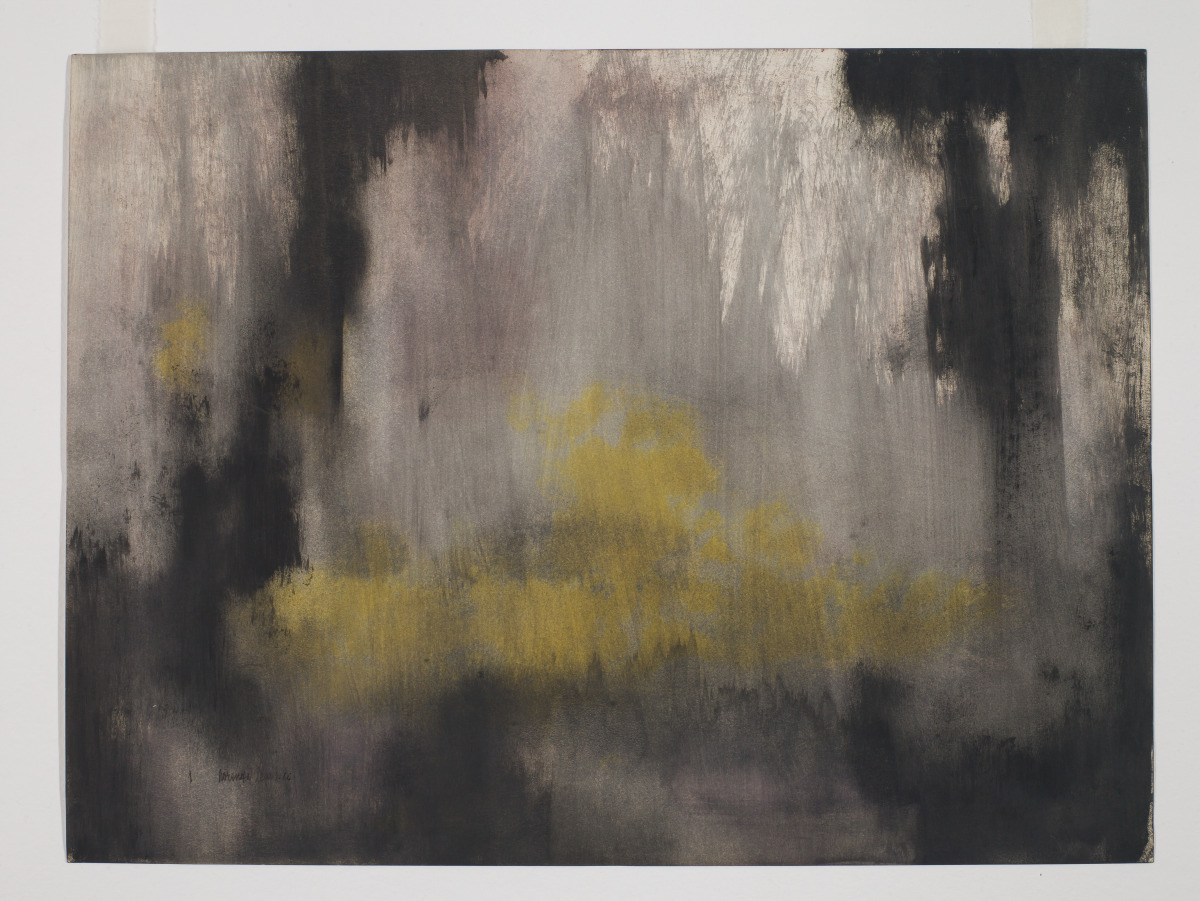
Untitled, 1966
Norman Lewis, American, 1909–1979
oil
The Thelma and Bert Ollie Memorial Collection, Gift of Ronald and Monique Ollie 167:2017
© The Estate of Norman W. Lewis; Courtesy of Michael Rosenfeld Gallery LLC, New York, NY
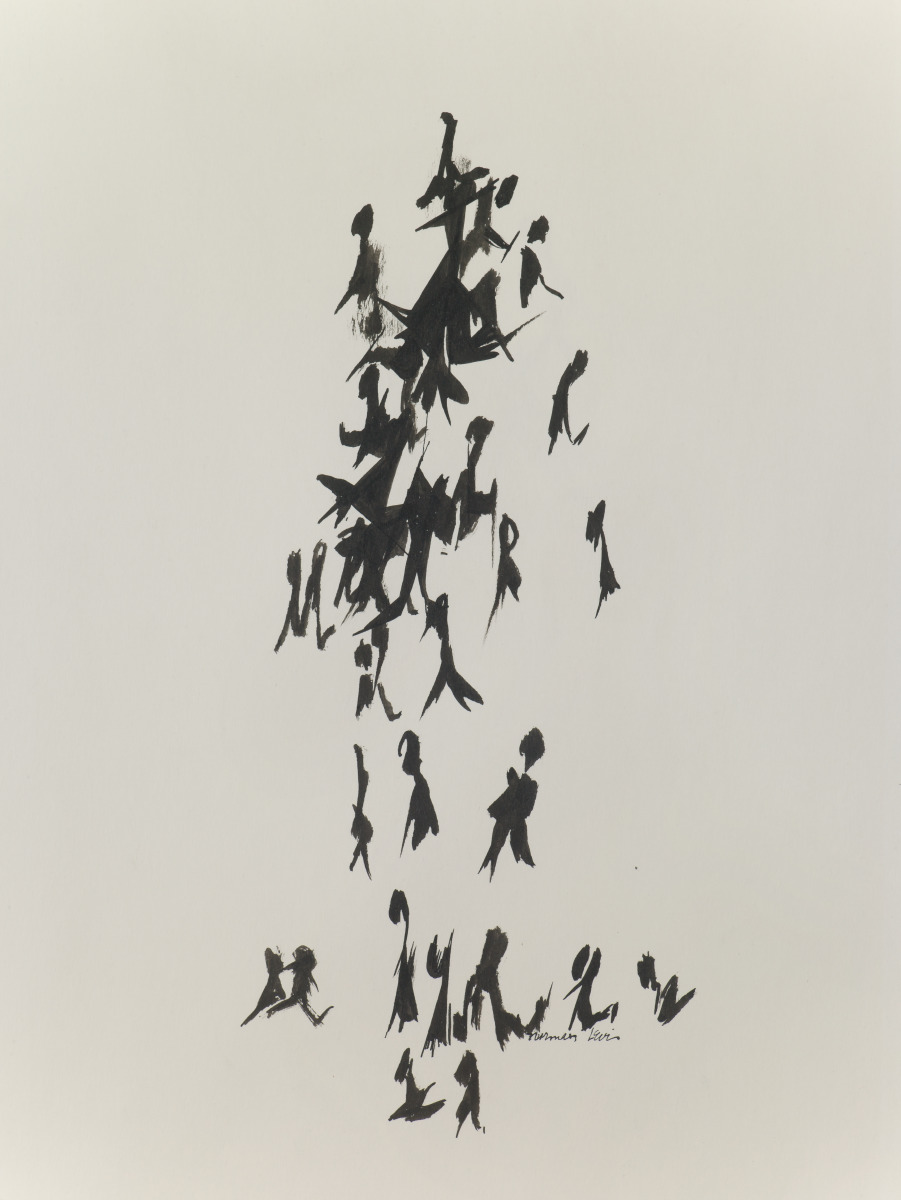
Untitled, c.1940s
Norman Lewis, American, 1909–1979
ink
The Thelma and Bert Ollie Memorial Collection, Gift of Ronald and Monique Ollie 166:2017
© The Estate of Norman W. Lewis; Courtesy of Michael Rosenfeld Gallery LLC, New York, NY

Togetherness, 1973
Norman Lewis, American, 1909–1979
etching
printed by Robert Blackburn Printmaking Workshop, New York
The Thelma and Bert Ollie Memorial Collection, Gift of Ronald and Monique Ollie 164:2017
© The Estate of Norman W. Lewis; Courtesy of Michael Rosenfeld Gallery LLC, New York, NY
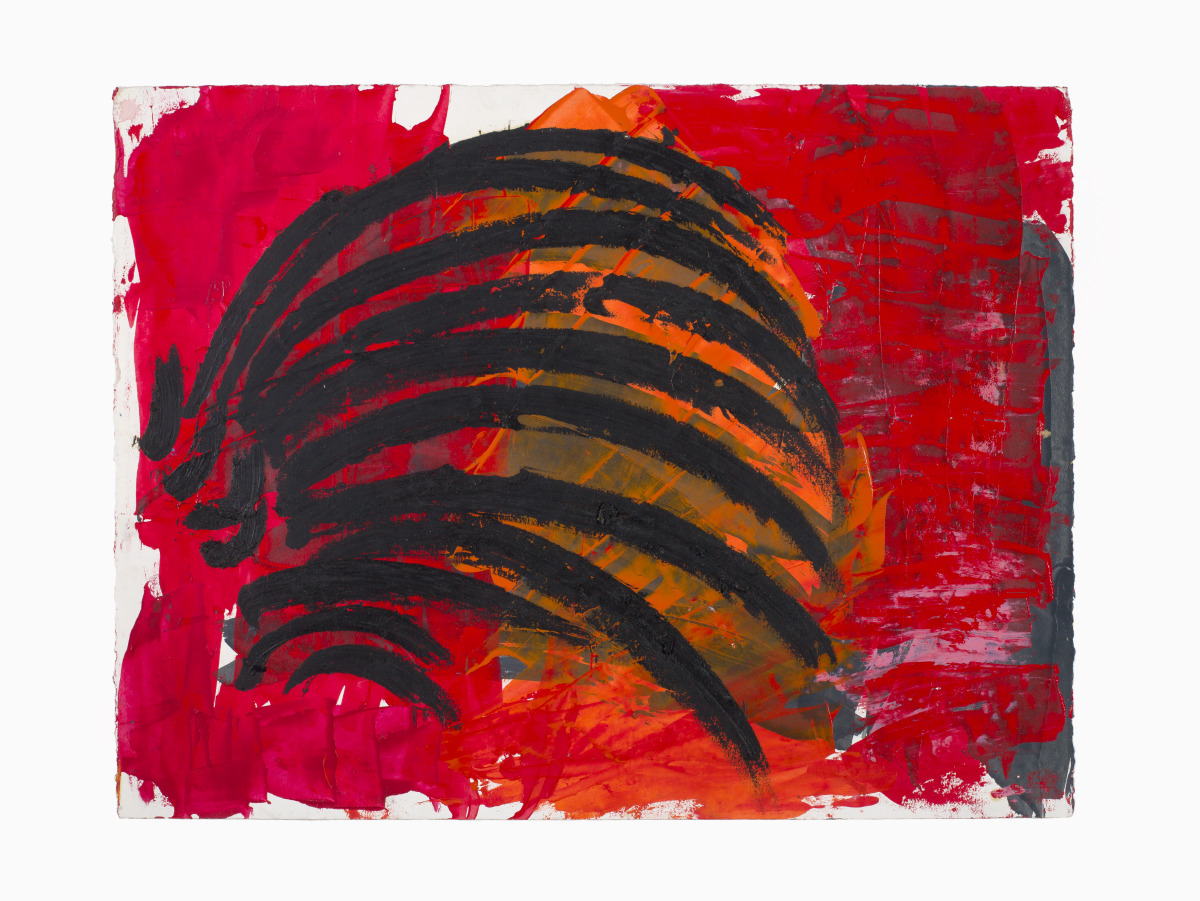
Untitled No. 02 038, 2002
Lamerol A. Gatewood, American, born 1954
oil
The Thelma and Bert Ollie Memorial Collection, Gift of Ronald and Monique Ollie 135:2017
© Lamerol A. Gatewood 5.13.2002

Black Bird, 1980
Benny Andrews, American, 1930–2006
lithograph
printed by Springraphics, New York
The Thelma and Bert Ollie Memorial Collection, Gift of Ronald and Monique Ollie 117:2017
© Benny Andrews / Artists Rights Society (ARS), New York, NY
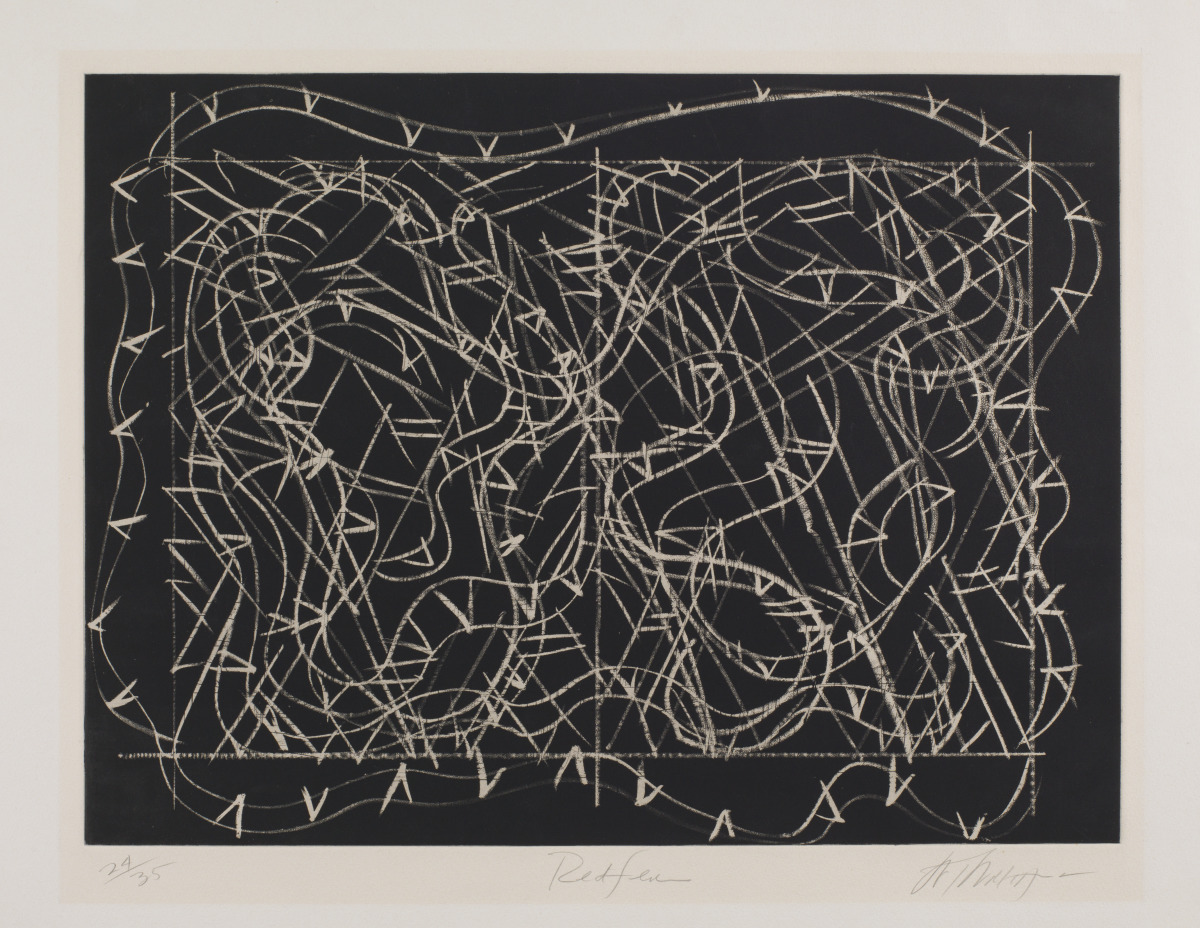
Red Fern, 1979
William T. Williams, American, born 1942
etching and aquatint
printed by Robert Blackburn Printmaking Workshop, New York
The Thelma and Bert Ollie Memorial Collection, Gift of Ronald and Monique Ollie 182:2017
© William T. Williams; Courtesy of Michael Rosenfeld Gallery LLC, New York, NY
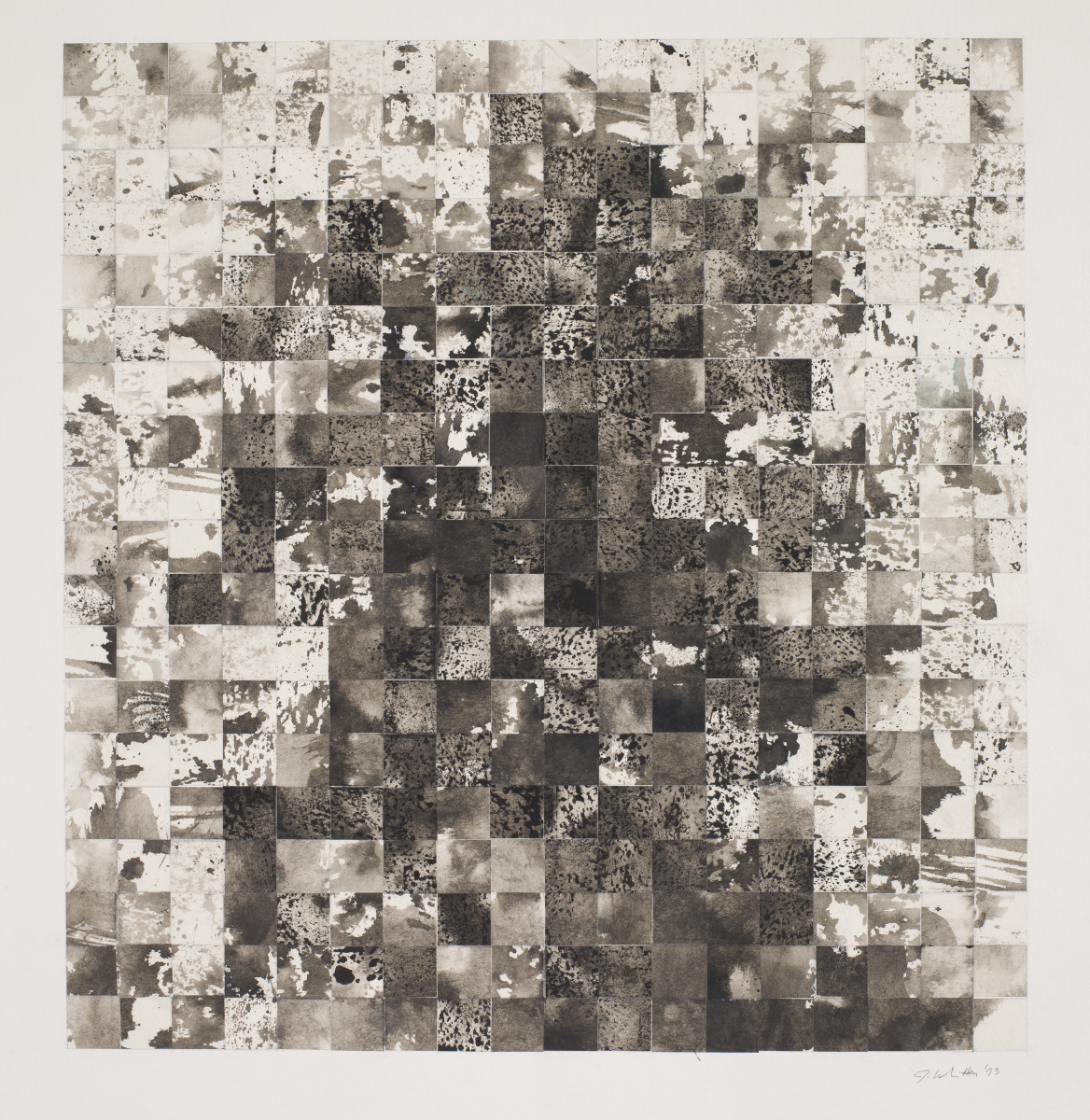
Self Portrait, 1993
Jack Whitten, American, 1939–2018
collage of cut painted paper
The Thelma and Bert Ollie Memorial Collection, Gift of Ronald and Monique Ollie 181:2017
© Jack Whitten Estate. Courtesy the Jack Whitten Estate and Hauser & Wirth
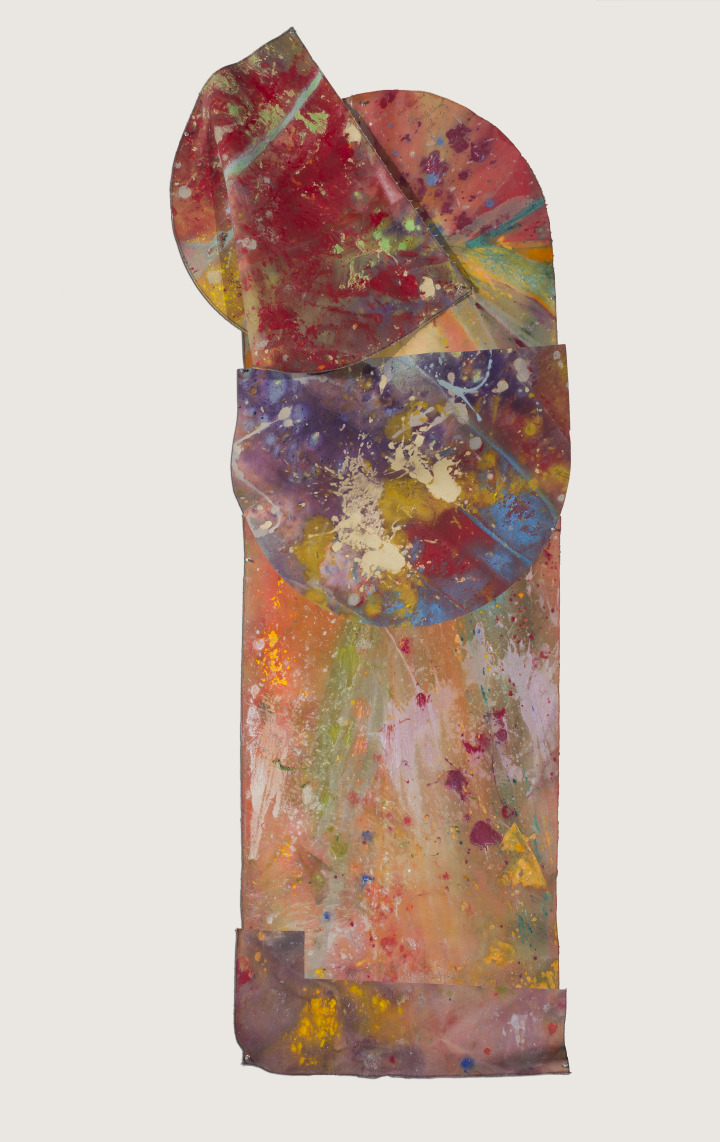
Many artists defining abstraction during the late 20th century made shape the subject of their art. These explorations, combined with concerns for color and materials, manifested myriad visual outcomes, from amorphous, fluid fields to crisply defined geometric designs. Moreover, artists’ considerations of shape played a vital role in the reassessment of painting during the 1950s and 1960s, when the medium’s definition fell under intense scrutiny.
Figures such as Ed Clark, Al Loving, and Sam Gilliam saw the medium as something more than a picture window into an illusionistic space. Thus, they refuted the rectangular canvas and instead configured their supports into rounds, hexagons, notched polygons, and even draped masses.
Ed Clark, who is credited with one of the earliest shaped-canvas paintings, observed: “I began to feel something was wrong. Our eyes don’t see in rectangles. I was interested in expanding image, and the best way to expand an image is in the oval or ellipse.” Recalibrating categories, these artists emphasized the sculptural qualities of painting, as well as drawing and prints, inspiring multimedia and installation artists who followed them.
Sam Gilliam, American, born 1933; Half Circle Red, 1975; acrylic on canvas; 78 x 33 x 6 inches; The Thelma and Bert Ollie Memorial Collection, Gift of Ronald and Monique Ollie 189:2017a,b; © Sam Gilliam / David Kordansky Gallery
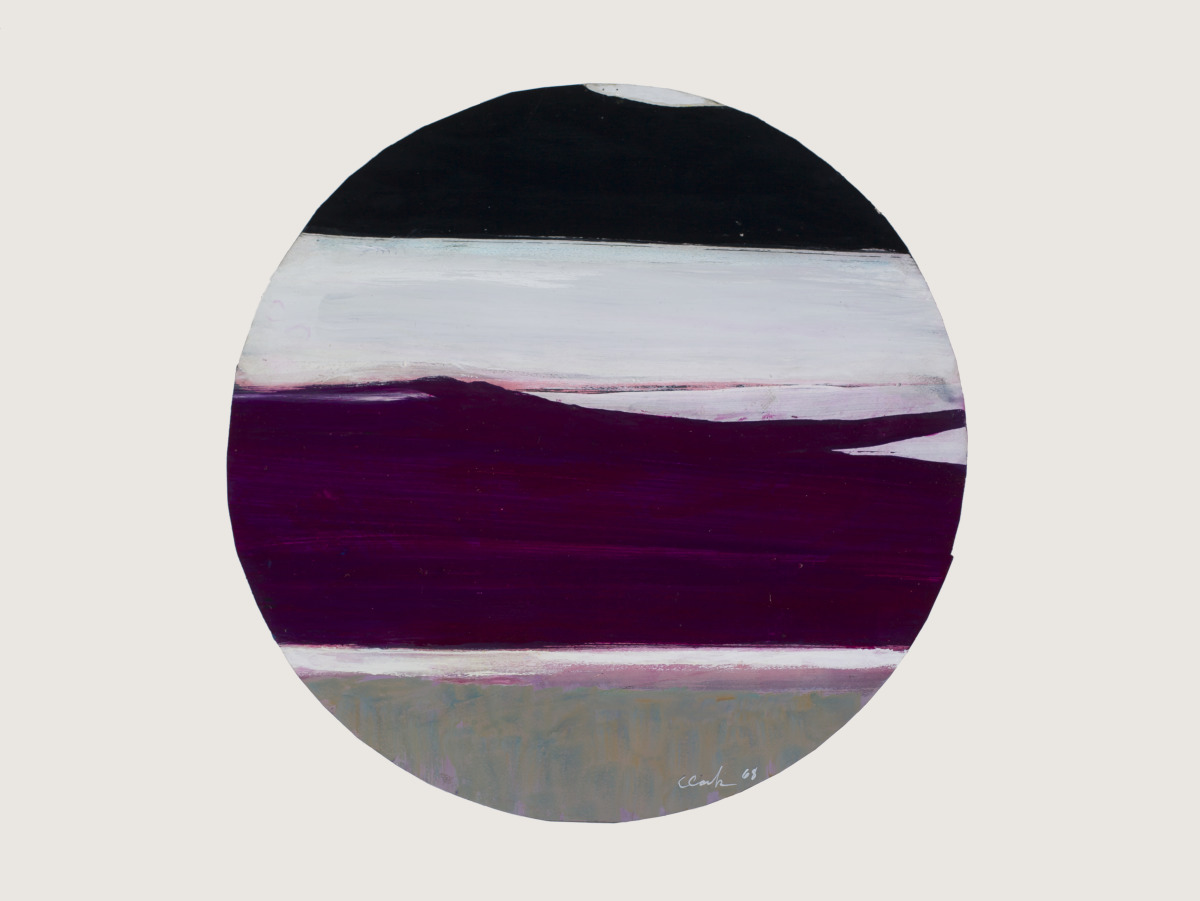
Untitled, 1968
Ed Clark, American, born 1926
acrylic
The Thelma and Bert Ollie Memorial Collection, Gift of Ronald and Monique Ollie 125:2017
© Ed Clark / Michael Rosenfeld Gallery
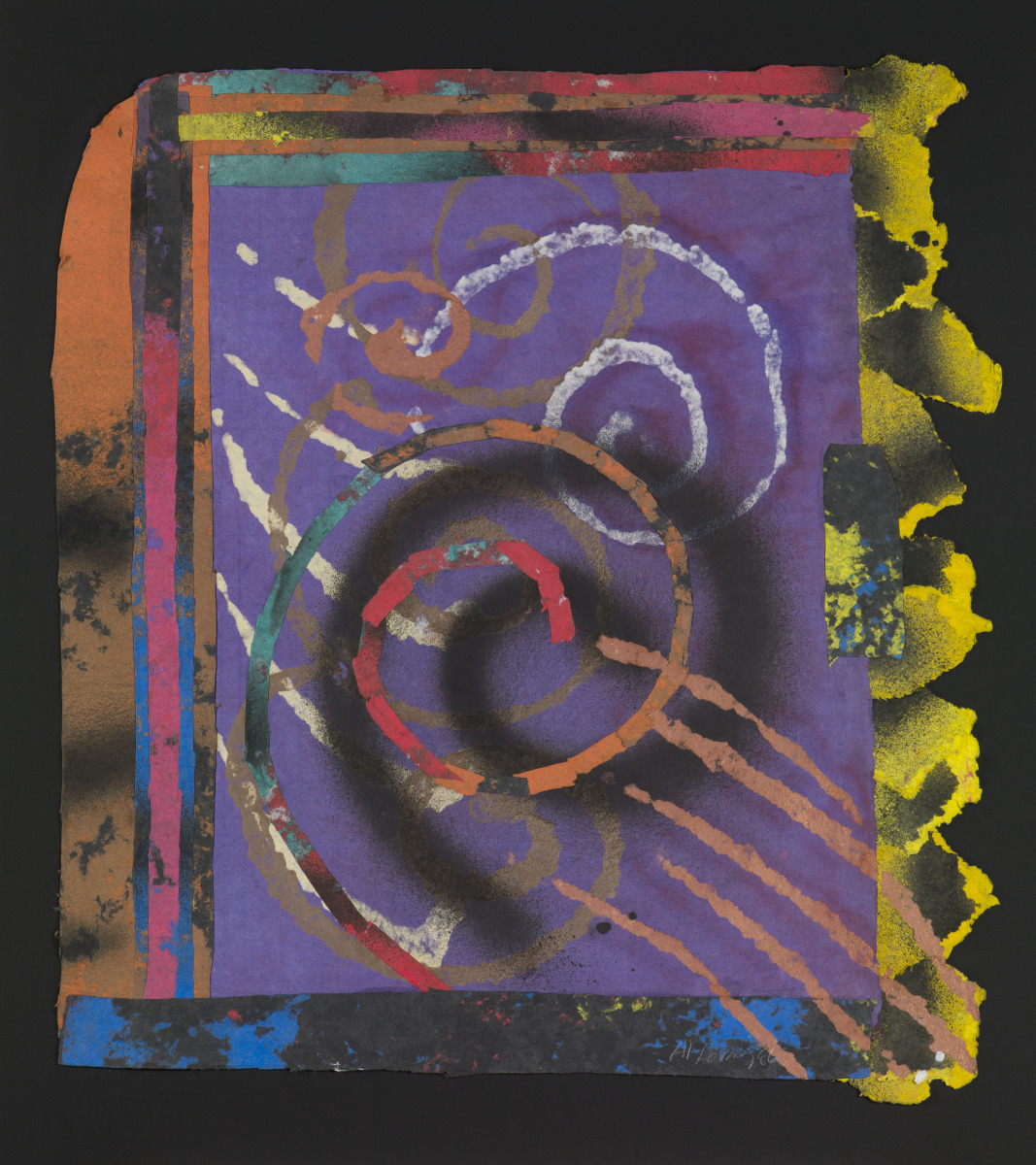
Mercer Street series VI, 1986
Al Loving, American, 1935–2005
collage of painted and printed papers
The Thelma and Bert Ollie Memorial Collection, Gift of Ronald and Monique Ollie 171:2017
© Al Loving
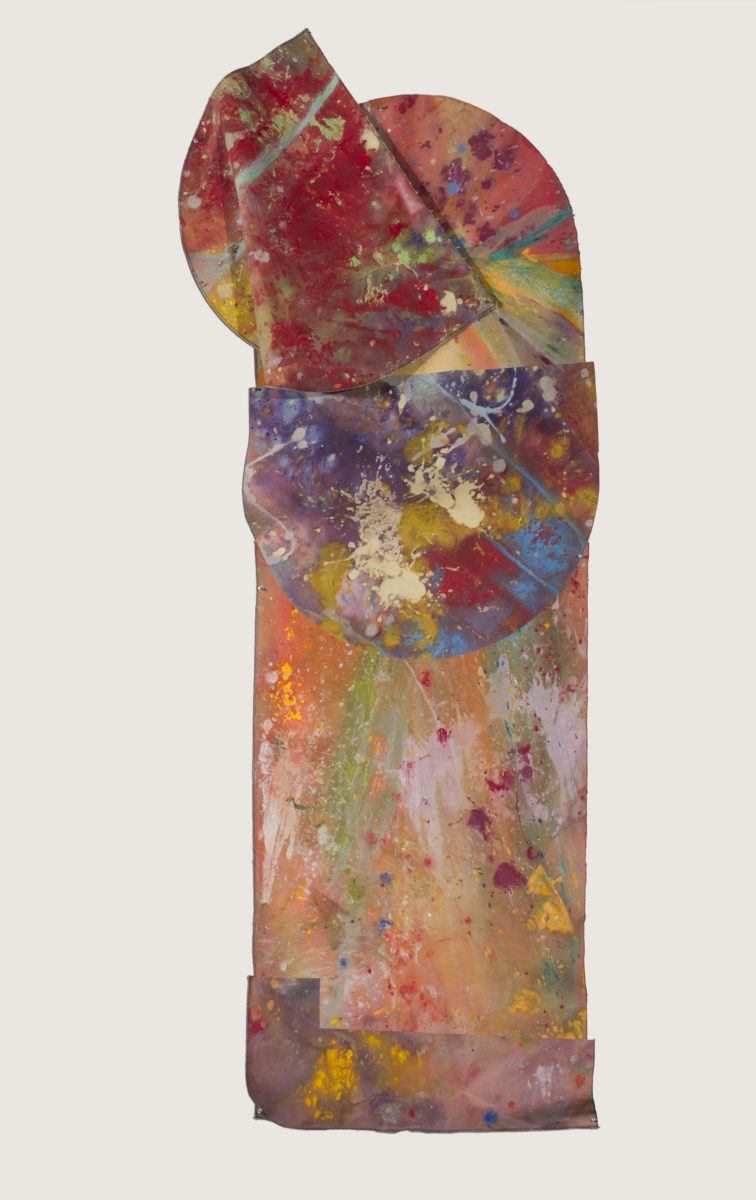
Half Circle Red, 1975
Sam Gilliam, American, born 1933
acrylic on canvas
The Thelma and Bert Ollie Memorial Collection, Gift of Ronald and Monique Ollie 189:2017a,b
© Sam Gilliam / David Kordansky Gallery
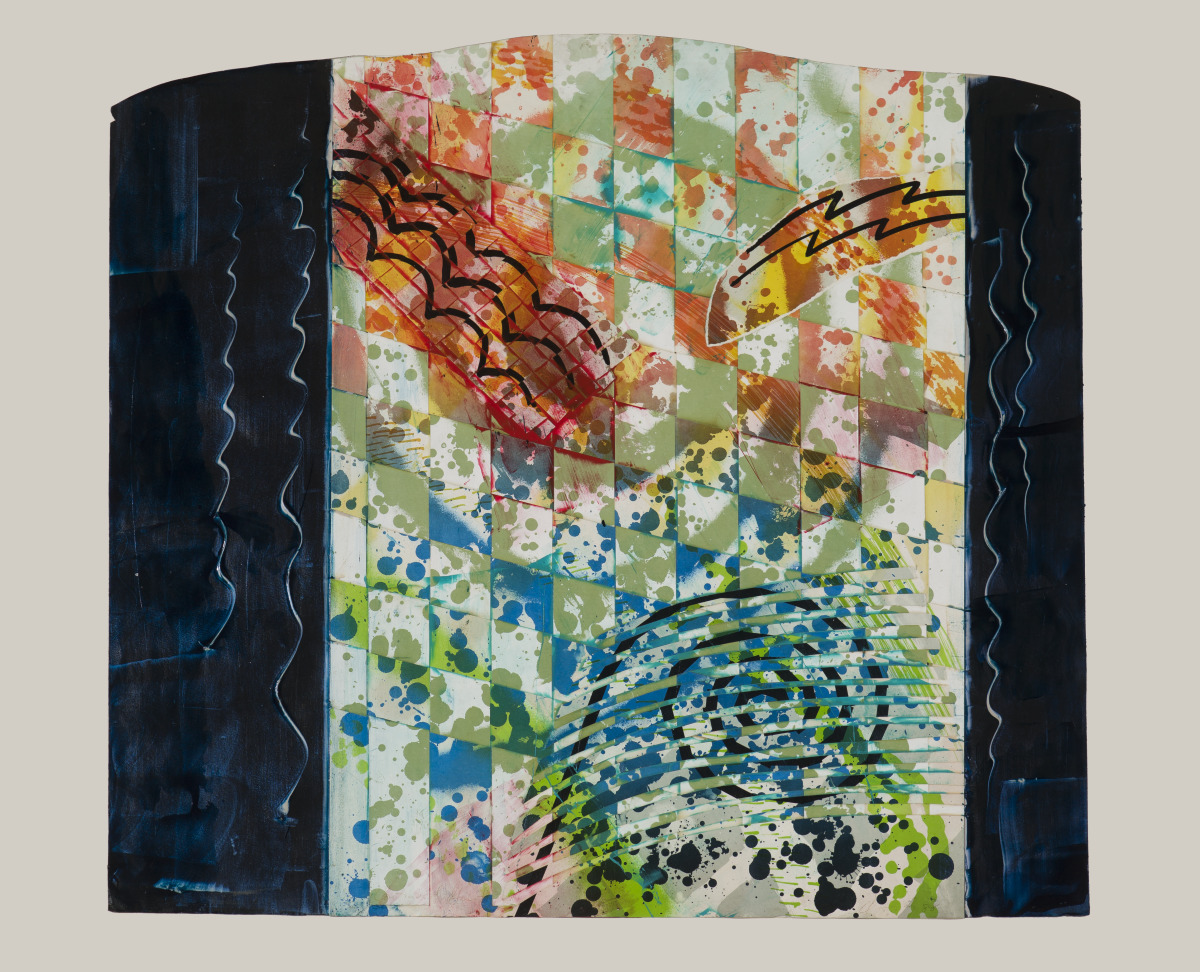
Life and Continual Growth, 1988
Al Loving, American, 1935–2005
collage of cut printed paper with acrylic
printed by Brandywine Workshop, Philadelphia
The Thelma and Bert Ollie Memorial Collection, Gift of Ronald and Monique Ollie 170:2017
© Al Loving
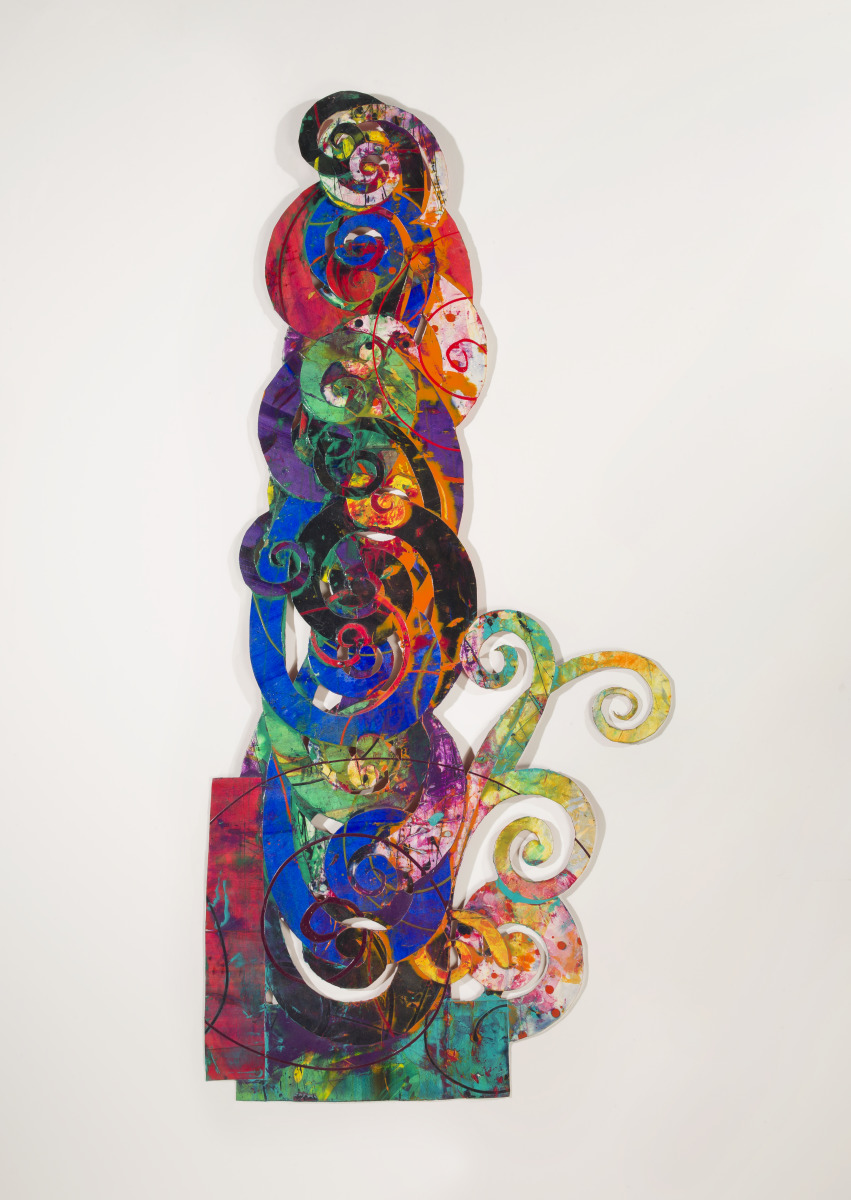
Zayamaca #4, 1993
Al Loving, American, 1935–2005
collage of painted paper mounted on Plexiglas
The Thelma and Bert Ollie Memorial Collection, Gift of Ronald and Monique Ollie 172:2017
Courtesy the Estate of Al Loving and Garth Greenan Gallery, New York © Al Loving
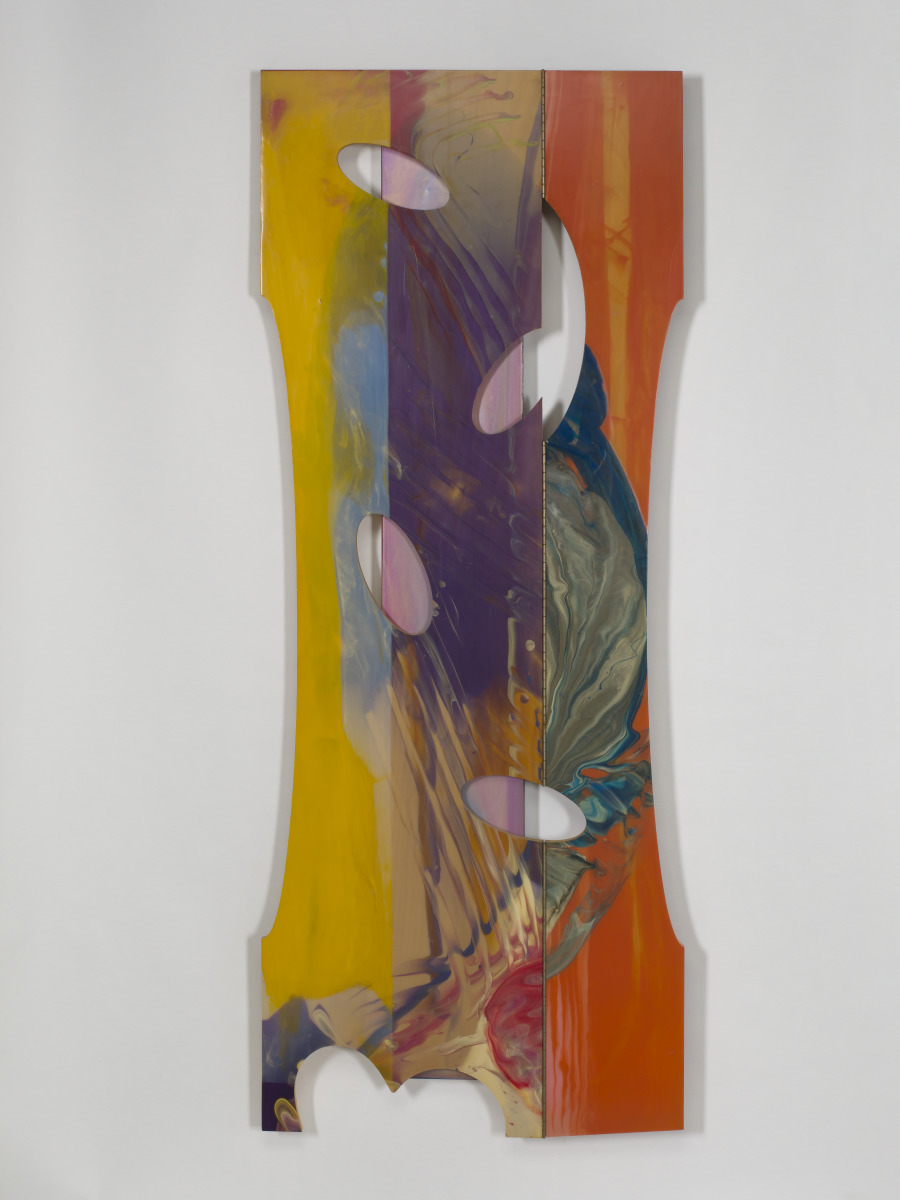
Ruby and Ossie, 2000
Sam Gilliam, American, born 1933
acrylic on plywood with metal hardware
The Thelma and Bert Ollie Memorial Collection, Gift of Ronald and Monique Ollie 188:2017
© Sam Gilliam / David Kordansky Gallery
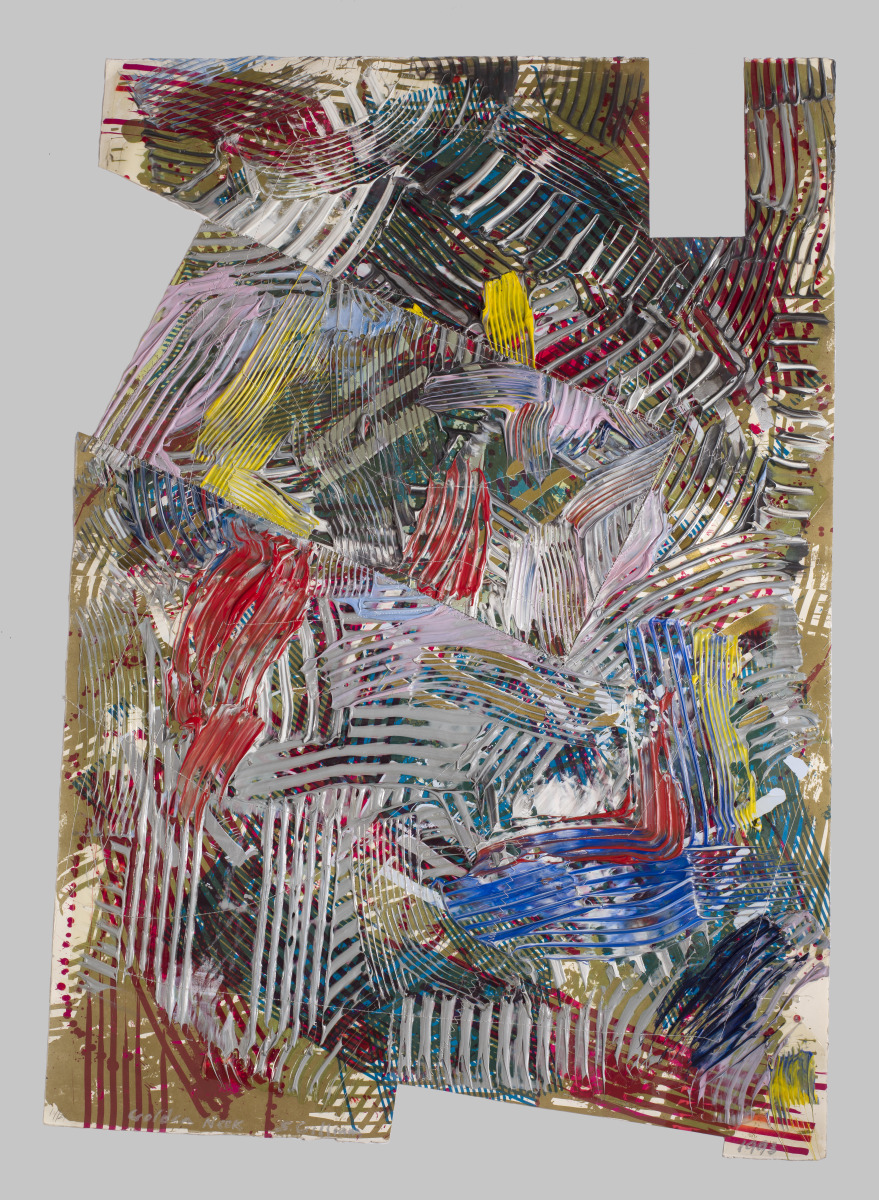
Golden Neck, 1993-94
Sam Gilliam, American, born 1933
screenprint, offset lithograph, and hand applied acrylic, with stitching
published and printed by Brandywine Workshop, Philadelphia
The Thelma and Bert Ollie Memorial Collection, Gift of Ronald and Monique Ollie 154:2017
© Sam Gilliam / David Kordansky Gallery
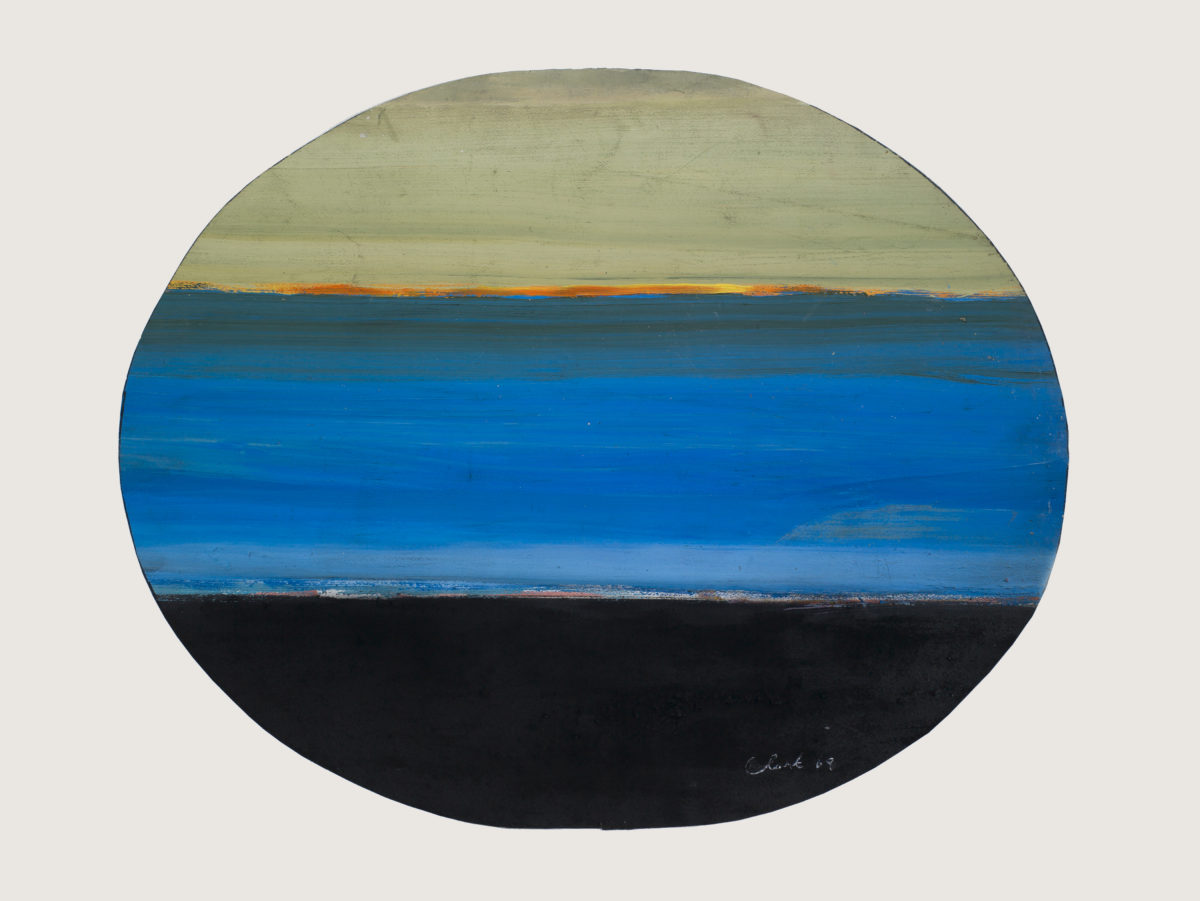
Untitled, 1969
Ed Clark, American, born 1926
acrylic and dry pigment
The Thelma and Bert Ollie Memorial Collection, Gift of Ronald and Monique Ollie 126:2017
© Ed Clark / Michael Rosenfeld Gallery
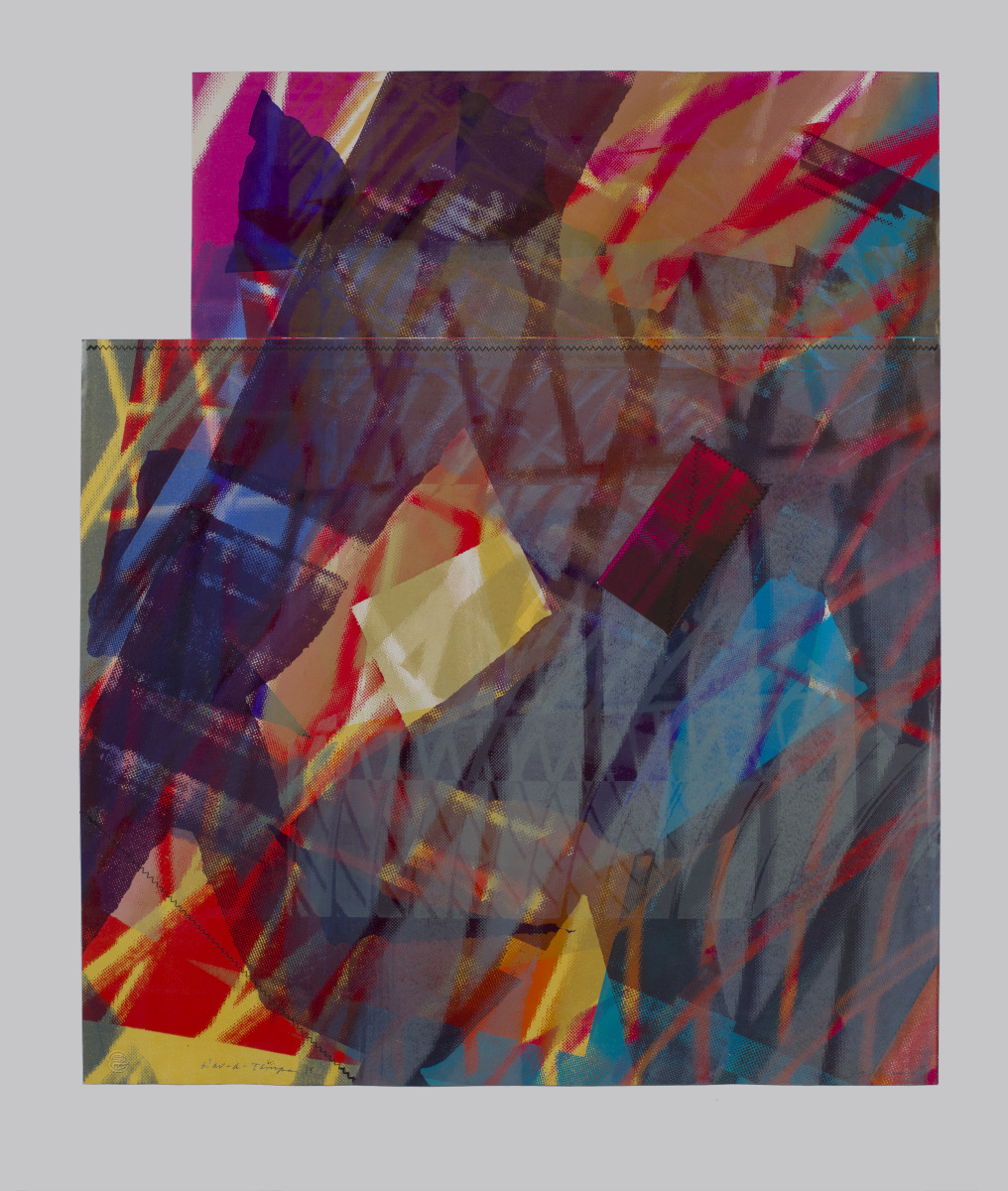
Hav-a-Tampa “15”, 1995
Sam Gilliam, American, born 1933
screenprint and monoprint, with stitching
The Thelma and Bert Ollie Memorial Collection, Gift of Ronald and Monique Ollie 155:2017
© Sam Gilliam / David Kordansky Gallery
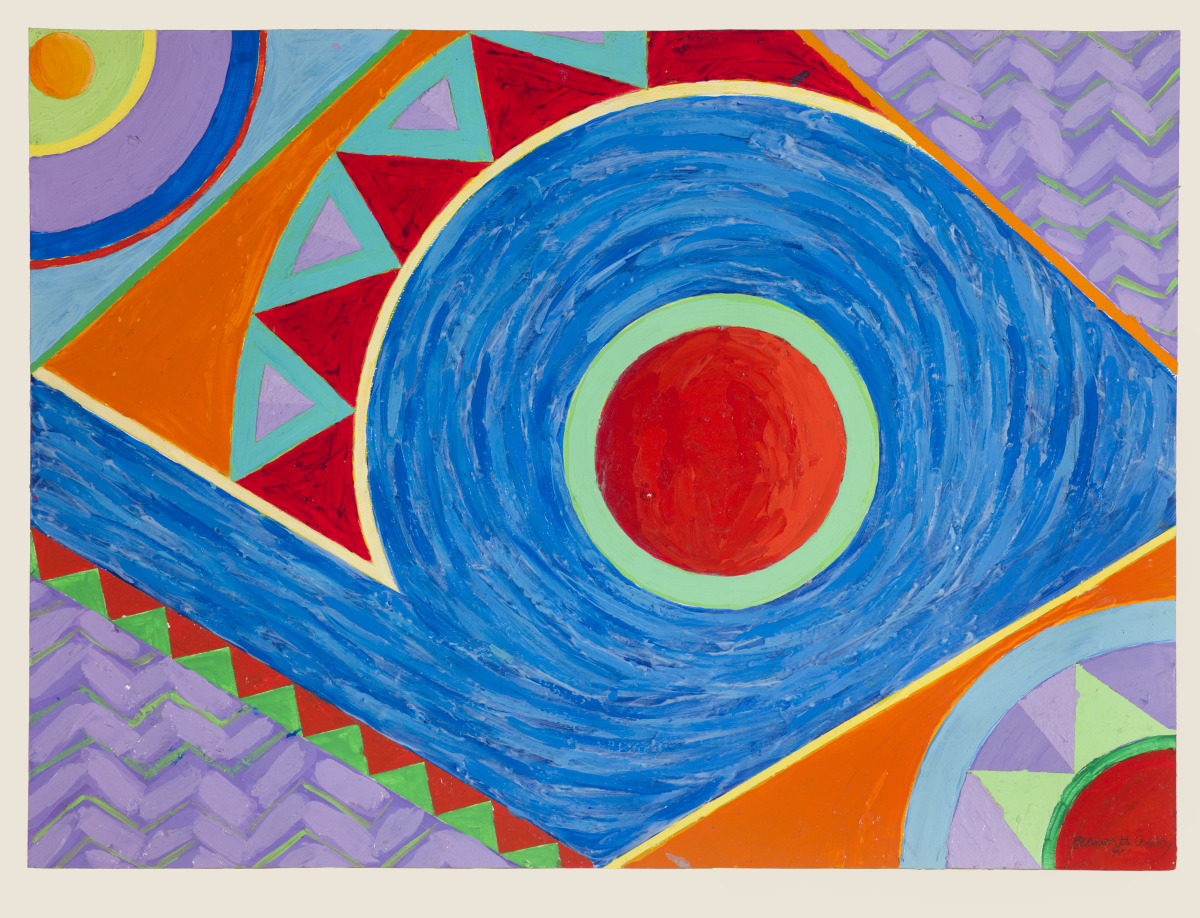
Meditation in Blue, 1998
Ellsworth Ausby, American, 1942–2011
acrylic
The Thelma and Bert Ollie Memorial Collection, Gift of Ronald and Monique Ollie 118:2017
© Ellsworth Ausby
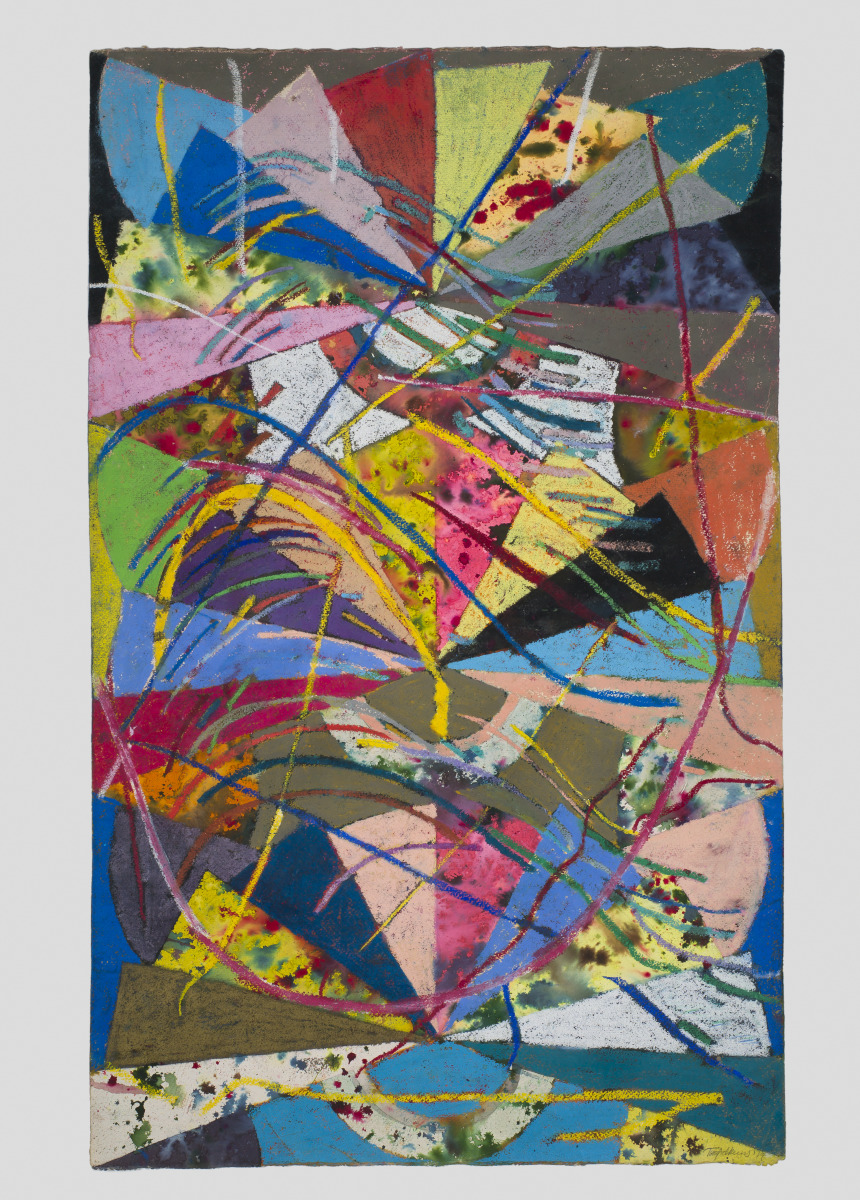
Untitled, 1979
Terry Adkins, American, 1953–2014
pastel and wet color
The Thelma and Bert Ollie Memorial Collection, Gift of Ronald and Monique Ollie 114:2017
© 2019 The Estate of Terry Adkins / Artists Rights Society (ARS), New York
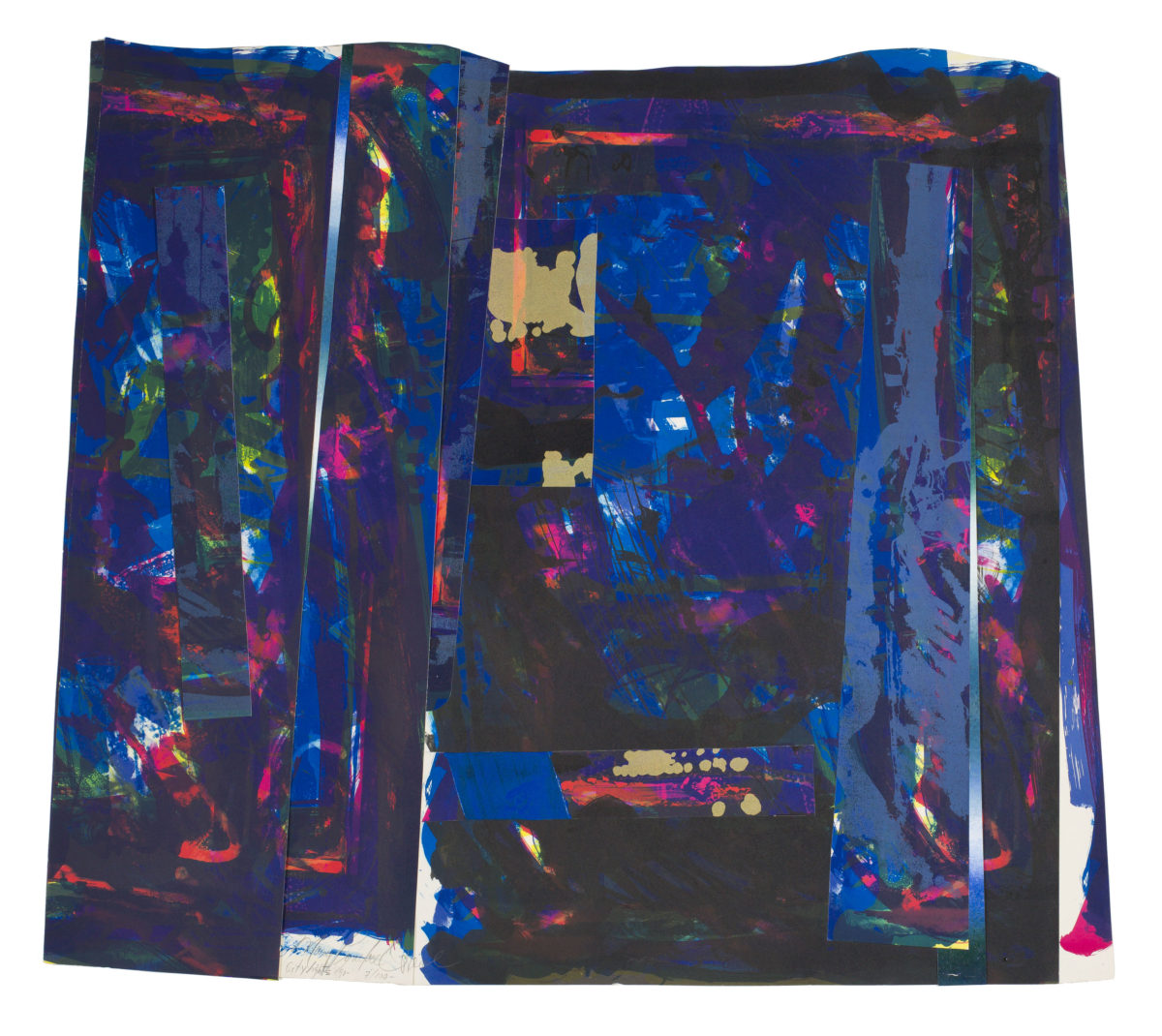 City Lights (Prophet with No Tongue), 1988
Mary Lovelace O’Neal, American, born 1942
offset lithograph and screenprint
The Thelma and Bert Ollie Memorial Collection, Gift of Ronald and Monique Ollie 177:2017
© Mary Lovelace O’Neal
by Quincy Troupe
the shape of abstraction is what the mind believes
it sees, figures, colors emerging from a canvas
(or a block of steel, limestone, wood chipped & cut,
chiseled, shaped into a memory, sanded down,
refined into grace, polished to a high sheen, almost
a mirror, reflects a creative imagination, where
the artist leaves their heart inside a language
born from power of a hammer’s head, artistry evolves
from there, fertile dreams of makers are transferred
in boogie-woogie riffs from bebop, deep in delta blues,
live inside a clean womb, hard surfaces birthing faces,
where voices scat, rap over hot jazz licks in harlem, zing
original forms, create words—like razzmatatazz—sling them
sluicing colors into living language—whatever raises to life
& sings, shocks, or disgraces the senses—as long as we are
here in the world, if it doesn’t burn, or explode into wars
created by man-made nuclear infernos—when horror,
conflict is chosen over beauty—a brushstroke can evoke
memory as love, heard sometimes in whispers),
is what a painter’s brushstrokes bring to life from empty
blank white wombs of canvases—they could be red, brown,
black, tan, or yellow canvases—until unknown pulse beats
birth embryos from there, raise them into breathing forms
from deep inside creative impulses, splashed with colors,
tones, as when we look up at cloud formations & see
in the sky wonders, images created up there are their own
music, rhythm, as when the sea rolls in clapping waves
foaming, roaring, then snarling into what eye imagine
mad animals might hear when suffering with rabies,
on the other hand eye imagine eyeballs bulging to see
what a ship way out on the infinite, razor-sharp blade edge
slicing the sea in half might mean from our view here on shore,
on a gray day full of silhouettes, contours of waving figures,
outlines of fluctuating images, forms dissipating
inside exhaust gasses belching from a smokestack vessel’s
burner trailing shapes behind it as it sails eastward
toward some unknown port it will reach in the dark dead
moment right before midnight, a star shining bright high
above in the night, is a white echo of light showing the way,
or is a one-eyed cyclops blinking down from history,
they are paintings after all, disintegrating on that blue
grey canvas of sky, is a rorschach test of faith, of what
one thinks the eye recognizes as art, transfers back to
probe the brain in an instant of volatility—which
is the push & pull of capricious decision-making
filled with impulsive hints of what or what not to choose
when eyeing creative choices offered up as barter,
in exchange for banknotes, trade, switch or swap,
is a form of negotiation, is a haggling bargain point,
which is an art form of sorts too, though not the same
creative level of expression true art springs from—
because art is shrouded inside mystery & magic
it is a force that can enrich, sustain life,
nourishing through beauty, joy, mirroring truth,
questioning what we know of ourselves, or don’t know,
asking us questions—why are we here & where
will all these shapes take us to through colors splashed
with beauty—or shock—where music evokes lines
tap-dancing through forms, breaks into rhythms,
takes us to a place where imagination wanders,
fills up space with magical, mysterious wonder